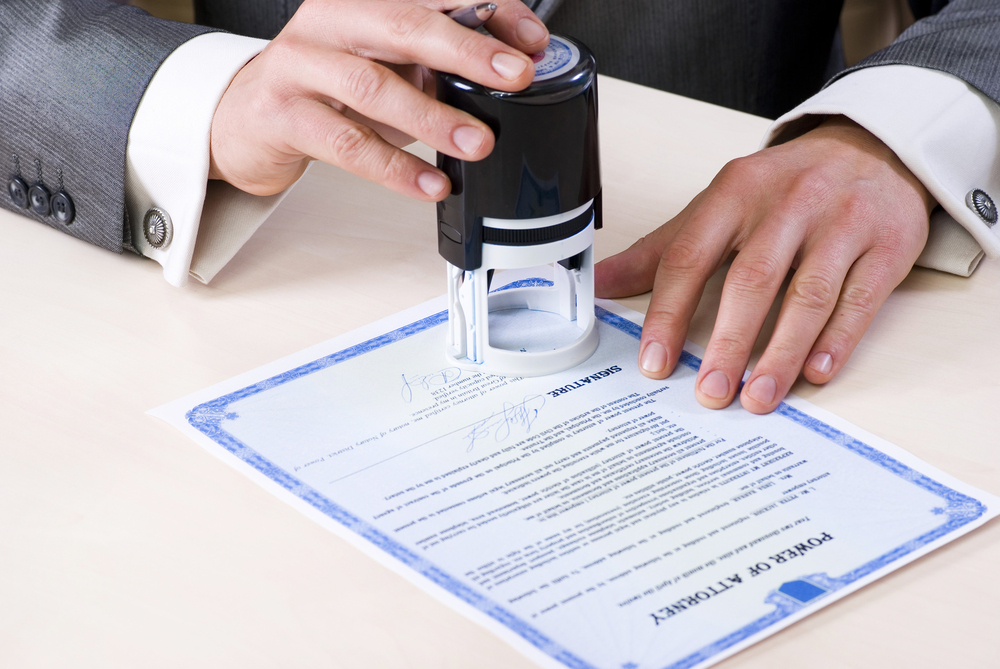
How Much Does an Agent Get Paid for Power of Attorney Services?

If you intend to appoint another person to serve as your attorney in fact or agent for health care, it can be confusing to determine what they should be paid. In most cases the people who are appointed in these roles are family members or friends and serve as your health care power of attorney without being expected to be paid for their services. NJ-power-of-attorney

This is true of legal and financial matters handled under durable powers of attorney as well. In certain situations, however, you might appoint a different person in the role of power of attorney, such as an accountant or a lawyer, in which case those professionals would charge for their time.

This is because these professionals would be hesitant to take on the time consuming responsibilities of a personal nature so you might be able to agree on an hourly rate or even something that seems less like employment, such as making a donation to their favorite charity if your friend or family member is interested in serving as your POA agent.

If you are serving as a power of attorney for someone else, make sure you have a conversation first about whether you will be paid for this role or not. It’s critical to understand this especially if the person that is creating the POA has a long list of tasks you’ll need to manage in the event they become incapacitated.

For more questions about who should be considered as an ideal attorney in fact or power of attorney agent, sit down with your estate planning lawyer to discuss your current documentation and to ensure it aligns with your needs.  At our NJ power of attorney client meetings, we help our clients understand what is involved in crafting this document and in choosing someone to serve as your attorney in fact.


How Does Undue Influence Impact an Estate Plan?

Undue influence happens when an outside party exerts pressure on an individual causing that individual to adjust their estate plans to the benefit of the influencer. In simple terms, this can often refer to one person taking advantage of another. A live in care provider to your elderly loved one, for example, might exert undue influence on a loved one, convincing that elderly family member to update their estate plan so that it significantly benefits the care provider.

In many cases the influencer could be involved in separating the family member from his or her loved ones to create a direct sense of connection and dependency. Those individuals suffering from a form of dementia, people with disabilities and elderly people are most susceptible to the impact of undue influence. It’s important to note that the influencer could be a person outside or inside the family.

If you suspect that your loved one was a victim of undue influence that caused significant changes to an existing estate plan, you can contest the trust or will that was updated at the influencer’s request once the estate has been admitted to probate. There are a few different factors that the court will explore when determining whether or not undue influence was at play.

These primary indicators can include unexpected gifts, whether or not the testator was isolated, the testator’s mental and physical state at the time of the updated estate plan, and scrutinizing any special relationships that the testator had with the influencer. For more information about avoiding undue influence in your own estate plan and protecting your interests now, set up a time to sit down and discuss your estate plan with a lawyer.  Need more support or have specific questions about your NJ estate plan? Set up a time to speak with our trusted estate planning lawyers in NJ. 

Get an Attorney to Review Your POA Document

Has someone you know asked you to execute a power of attorney that names you as their agent? Never sign a power of attorney document without having your own estate planning lawyer view it first.

There are many different mistakes that could be made in a power of attorney document and all of them can be avoided by consulting with a trusted estate planning lawyer in your area.

Making a mistake in your POA document could be very expensive and problematic, particularly if you unintentionally give authority over you or your assets to someone who can’t be trusted. Many of the most common POA mistakes can be avoided but having a relationship with an estate planning attorney who can help spot these errors in your existing POA document or can advise you about the proper language to include in a new one.

Some of the most common POA mistakes include:

  • Using a general POA when a limited power of attorney would have been more appropriate.
  • Naming a person that you can’t truly trust as your agent.
  • Giving an agent who cannot be trusted with too much power.
  • Executing a power of attorney to someone who cannot serve in that role, such as a treating physician.

For more advice on how to minimize the possibility of a poorly executed POA or a POA that exerts unintended authority on untrustworthy people, set aside a time to consult with a knowledgeable estate planning lawyer about the documents.

Can a Person Still Sign a Power of Attorney If They are Legally Incompetent?

A person cannot sign any legal document including one that would appoint a power of attorney if they are incapacitated. This is one of the most common misconceptions about the power of attorney document. Only a mentally competent individual is able to appoint a power of attorney for themselves.

Once a person lacks legal capacity such as that they have experienced significant cognitive decline as a result of dementia or another circumstance, they are no longer eligible to execute a power of attorney document that would be classified as legally valid. These documents need to be created well in advance of a person being classified as incompetent.

It can be helpful for someone who is of older age and wishes to prevent problems surrounding their POA document to schedule a consultation with an estate planning attorney to walk through the process of creating a POA and deciding whether it should be general or specific in nature. It is also helpful for a person who is currently legally competent and wishes to document this to have a physician prepared to write a letter about the person’s state of mind at the time that the power of attorney is executed.

This can be very helpful in the event that another person is challenging the legality of the power of attorney or any other challenges arise in the agent’s attempt to carry out their duties. Schedule a consultation with an estate planning attorney in your area to learn more.   Since you need to sign a POA before you’re incapacitated, now is the right to make this decision to install the right person in this all-important role.    

What Happens When a House That Is Split Multiple Ways Is Rented, Passed or Sold at Death?

If you have a loved one who is elderly and owns a house that no longer has a mortgage on it, it is important to look carefully at the deed to determine who has the rights to this home.

If, for example, an elderly loved one took money to pay taxes on the home from somebody else and added those parties to the deed, the proceeds should be divided equally among the parties who contributed towards the taxes as well as the homeowner. A key question is whether or not the people who have been added to the deed are tenants in common or own the property as joint tenants.

Upon the loved one’s death, the deceased individual’s interest will automatically disappear if the property was owned as joint tenants. If it was owned as tenants in common, the one-third interest for the primary owner will pass to the estate and will be distributed according to the will.

Real estate is one of the most challenging kinds of assets to move through probate. It’s imperative that you discuss your options directly with an attorney who is familiar with how to include these in your estate plan so that you know your next steps.

There are many complex issues involved in determining whether or not someone has an interest and a proper plan for what happens to their real estate property after they pass away. Schedule a consultation with a trusted estate planning lawyer to learn more. Our NJ estate planning law office can help with your real estate planning for probate and beyond.


What’s Included in an Elder Law Agreement?

It is very common to sign an agreement or a contract with an attorney that you intend to work with and an elder law attorney is no different. Based on your initial consultation with this elder law attorney you will have a better sense of the services that would be provided and the process with which you expect to work with this person.

Each law firm’s engagement agreement is different and it’s a good idea to read through the specifics of your elder law agreement so that you understand the exact terms of the working arrangement. This includes planning options discussed and the next steps for moving forward.

This can also involve a fee quote for implementing the plan and the terms of payment arrangement, such as asking for half of the fee at the time this person is hired and the balance when the client returns. It can be very difficult to determine the scope of work for all elder law work agreements. This means that your elder law attorney might instead choose to charge by the hour and request a retainer. This can be different in litigation and probate matters as well, so you’ll want to be clear about the exact type of services for which you intend to retain an experienced attorney.

A knowledgeable lawyer will be able to use the information gleaned in the initial consultation to draft up a work agreement. You also have the right to read through this entire agreement and determine whether or not to sign it. Make sure that you ask all of your questions upfront before signing the agreement because it will be assumed that you have read this document and have made your decision to move forward based on it.

How to Make Assets Easier to Find for Your Executor?

The executor or the person appointed to administer your estate will have many different responsibilities in closing out your estate, such as paying taxes, notifying creditors and informing beneficiaries about any remaining assets that must be distributed. In order to start all of these processes, however, it is essential for your executor to be able to identify all of the assets that you currently own as well as any liabilities under your name.

This can be one of the most time consuming parts of the process for an executor and it is well worth your effort to do everything you can to make it easier for them to find all of your tangible property as well as other online accounts.

By creating a personal property inventory and storing it in a location in which it will be easy for the executor to  find or receive immediately after you pass away, you can make this process much easier for the executor and also ensure that all of your assets are properly tallied up in your estate inventory to be distributed among your beneficiaries.

Although you might have a mental calculation of all of these different assets, it’s important to have this written notice because no one other than you or potentially a spouse would be able to easily locate all of these property items and account access details.

You will greatly speed up the time for which probate is required in your case by leaving behind such an inventory of assets or even directions for your probate administrator to organize and inventory all of these. Schedule a consultation today with an estate planning lawyer to learn more.


How to Get Your Will Done Quickly

The pandemic has opened many people’s eyes to how unexpected health circumstances can change the scope of the foreseeable future for you and your family members. If you’ve been putting off creating a will, here are a couple of tips to finally get that important document done. First of all, think about who you are doing it for.

Yes, your will is your document determining you will pass on assets but it’s really your beneficiaries or your heirs who will ultimately benefit from the work you do in creating it. You are potentially saving your beneficiaries from expensive costs and delays of hiring a lawyer after the fact to try to sort out your estate. Even many people who have procrastinated on their estate planning can see the positive benefits of thinking about how it could serve your loved ones better in the future. If you’re finding yourself demotivated to approach it on your own, think about helping your family. Another way to jump into the act of creating your will is to visualize what might happen without it.

Thinking about worst-case scenarios can spur some people into action. Without an estate plan your family could wind up in court determining who takes care of your minor children. Furthermore, state law will determine who inherits your belongings and the distribution might not be the way that you intended for it to look. Avoiding these common challenges are big reasons why it is beneficial to schedule a consultation with an estate planning attorney.

Creating a will doesn’t have to be difficult or take a long time. Make sure that you have a list of all of your assets to the best of your knowledge before sitting down with your estate planning lawyer to talk through some of the aspects of creating your will.

An easy way to hold yourself accountable is to just set up a meeting with a lawyer. This step alone gives you a chance to get it on your calendar and off of a revolving to do list.

What Are the Downsides of Challenging a Will?

It might seem like an initial gut reaction to challenge a will that you don’t believe is in line with what a parent or other relative had told you prior to passing away. It is important to realize that there are circumstances in which you are legally eligible to challenge a will but this is not necessarily the same thing as knowing when it is appropriate to challenge a will. You could risk spending a lot of time and money for the result of being completely disinherited depending on the terms inside that will.

You may be eligible to challenge the will of a deceased person but the outcome of this case could be very uncertain. First of all, you must have a basis for the challenge.

You must show that there was something wrong about the conditions under which the will was made or something wrong with the will itself. For example, you might argue that the will doesn’t meet formal requirements, that the will maker created it under suspicious conditions or that the will maker didn’t have the legal capacity to create a will. You could argue undue influence, fraud or mistake, lack of capacity or a flaw in document requirements.

Challenges are handled in probate and each state has unique laws about the procedures for a will challenge and these can even vary from one county to another. If you challenge a will that contains a section known as a no contest clause, you could risk losing any inheritance that would have otherwise been available to you through the will.

Plenty of wills contain such a no contest clause which means that anyone who attempts to file a will challenge could be completely disinherited. Schedule a consultation with an estate planning lawyer if you are curious about adding a no-contest clause to your own will.


What Do You Need to Know About Estate Planning Options with Potential Biden Tax Increases?

As we get closer to an election, it’s important to think about how your estate plan might need to be updated or changed altogether in light of who is elected. Some of the most common issues that have been popping up with Biden’s proposed tax plans have to do with accelerated capital gains and bonuses, deferring deductions and more.

Some important steps you’ll need to take before the end of the year depending on who is elected will rely on the insight and experience of your trusted estate planning attorney. There are several important things you need to have top of mind as a result of published proposals from Joe Biden or possible results from a legislative committee looking at revenue. These include:

  • Taxing of capital gains at ordinary income rates and similar treatment for dividends.
  • Potential eliminations of the step ups that exempt unrealized capital gains at death.
  • Acceleration of the Trump tax cuts that would start on January 1st, 2021 rather than January 1st, 2026.
  • Limiting deduction value to 28% even in cases in which the taxpayer’s income bracket is higher than that.
  • Imposition of a 12.4% social security tax.
  • Elimination of local and state income tax ceiling of $10,000.

All of these important and complicated issues should be discussed directly with your trusted estate planning lawyer. Make sure to schedule a consultation as soon as possible after the election if there are significant tax changes on the table.

Do You Really Need a Financial Plan?

You’ve heard about an estate plan and you might have even referenced an elder care plan, but do you know how your financial plan fits in with the rest of these documents and strategies? Your financial plan is somewhat distinct, although it is definitely linked to your overall estate plan. Your financial plan is a document that takes a comprehensive look at your financial picture and helps you to determine how you’ll achieve specific financial goals.

You’ll need to think about your wishes, wants and needs and also understand your overall comfort level with risk when creating your own financial plan. More often than not a person who is confronting their financial plan for the very first time will use financial planning software, such as an analysis showing the impacts of taking money out of your different retirement accounts and how to invest aggressively to save for retirement.

A detailed cash flow analysis or net worth statement can also help you to get a 30,000 ft view of some aspects of your financial life that you should remain focused on immediately. As part of your overall financial plan, this helps you see when you need to make changes to existing strategies and how to adapt when challenges or unexpected windfalls like inheritances come your way.

You’ll also need to document all investible assets that could be used to achieve your individual goals as well as your current and anticipated spending and your detailed liabilities. Once you know where you stand financially, you’ll be able to craft a plan that is in line with your unique goals and priorities.


Navigating Divorce? Now Is a Good Time to Talk to Your Financial Advisor and Estate Planner

Each person in a couple needs a team to help them navigate the tricky waters of divorce. The financial breakup and dissolution of your marriage has important implications for everything from retirement to the beneficiary designation forms you filed with your life insurance company.

And there’s no doubt that you are likely overwhelmed with all of the emotional, financial and physical aspects of parting ways to begin with so it can be hard to keep track of all of these details and ensure they are dealt with properly. Advising clients through major life changes is a core component of an estate planning attorney’s job.

A good rule to follow is to remain impartial and open when discussing estate planning matters with your attorney. Some of the most common things you might wish to bring up with your financial professionals and estate planning lawyer include:

  • An inventory of all the assets that are owned individually or jointly by the couple.
  • A listing of expenses including how those expenses might be adjusted for each spouse after the divorce.
  • Information about any long term care life or disability policies currently in place.
  • Reviews of any prenuptial agreement and how this could impact the division of assets in the divorce.

Your estate planning attorney can help you to look at the different documents that may need to be updated after you have gone through the divorce process. Knowing that you have another party to guide you through this difficult situation can help to make this complicated aspect of your life somewhat easier.

Need support from a NJ estate planning attorney? Divorce calls upon you to update your documents and ensure that everything is aligned with your new plans.


Estate Planning is Important Personal Finance for Young Adults

If you are currently in your 20s or 30s, it’s easy to brush off the idea of estate planning as something that is years down the road. But if the pandemic has shown us anything, it’s that you have to be prepared for the unexpected and that certainly is true for young adults and estate planning.  personal-finance-estate

You don’t have to be only rich or old to have an estate plan in place. Even with modest assets and good health at a young age, you can benefit from putting a plan in place now with the support of an attorney. This is because estate planning goes so much farther than just determining how you want to distribute your money when you pass away. It also includes protecting yourself and taking care of yourself and the people that you love. 

There are many major life events and financial decisions that happen after you graduate from college, start a family, get married or buy a house. These important steps, however, can make your life more complicated, meaning that it is even more complicated to have a comprehensive estate plan addressing these unique issues. 

As your estate plan and list of assets becomes more complicated, you want to ensure you’ve thought through all the details and have the right planning aspects in place. Waiting too long could expose your family members to unnecessary challenges in the future. 

Schedule a consultation with a trusted estate planning lawyer. Whether your estate planning documents grow or change in the future, you want to know that you’ve done what you can to protect yourself right now. 


What to Keep in Mind If You’re Getting Divorced During the Pandemic

Plenty of people have rethought their life choices including the partners, their homes and even their careers as a result of the pandemic. If you are one of the people who is thinking about getting a divorce, you are not alone since this prolonged period of being at home could lead some people to make the decision that it’s time for a change.

If you’re ready for the next chapter in your life, you need to be prepared for several different things that you can and should not do. First of all, if you begin to file for divorce you cannot change beneficiary designations of retirement accounts and life insurance policies or retitle assets. 

The vast majority of states will block you from being allowed to transfer ownership of assets or changing your beneficiary designations until assets have been divided as part of the divorce court process. However, this doesn’t mean that you can’t update anything. You are eligible to update your trust and your will so that you can identify a new guardian for your children or name a new trustee or executor. 

You’ll also want to have a sit down conversation with your divorce attorney and potentially your estate planning attorney about some of the other issues that often come up around divorce. You might be interested in updating your materials as soon as possible to disinherit your spouse but there is the possibility that your spouse could still have a claim against your estate if you pass away during the divorce. 

Before the divorce is final, you’ll need to be clear about the ability for these documents to remain active and active in terms of allowing your spouse to inherit something. If you attempt to disinherit your spouse entirely while the divorce is still pending and you pass away, your spouse could actually sue your estate for the assets they would be entitled to under state law. For a conversation about these complicated issues, contact your dedicated estate planning attorney to discuss your options.        


Tracking Your Digital Assets with Your Estate Plan

Most of the material you probably own that is an asset inside your estate plan is tracked in the form of paper. You might have kept it in a bookcase, in a filing cabinet or a safety deposit box. But what happens when more and more of your assets are digital? Increasingly, our most important things are actually on the cloud or on websites owned by other people.

It’s very difficult to avoid accumulating digital assets and sitting down and trying to list them all might open your eyes to some of the issues associated with this that could make it hard for you to do so. You’ll begin to see the scope of the challenge if you could complete that exercise of trying to list your different digital accounts.

Right now, your electronic communications and digital assets are entrusted to custodians in the form of those companies that store all of these assets like your photos on their servers. These are not governed by property law which means that the terms of service agreement established by the company is the underlying thing you will want to look at to determine what happens if the original owner is no longer able to access these details.

You’ll need to discuss the specifics with your estate planning lawyer if you have concerns about the process and how best to proceed. Scheduling a consultation with a trusted estate planning lawyer can open your eyes and help you put in place the necessary structures, tactics, and strategies to protect your interests.       

So You Own Cryptocurrency? You Definitely Need an Estate Plan

Has it been 10 or 20 years since you last updated your will or know that you created a trust at some point that was revocable but aren’t exactly clear on its terms? The emergence of bitcoin and cryptocurrency as well as plenty of digital assets that might be a part of your current estate means that you need to take a look at these older documents and discuss your options with an estate planning lawyer.

An estate planning lawyer can help you to craft a customized plan. Right now, Congress is holding hearings on the digitization of the dollar, which means that as a financial tool, cryptocurrency is front and center in becoming more and more important. To avoid making your heirs question whether or not you owned any cryptocurrency or worse, digging through the trash or looking at every computer you own to try to find this information, make sure that you preserve the benefits of cryptocurrency and have an established plan in place to ensure that your intended heirs are able to receive it.

Cryptocurrency is much like cash and that it is not traceable. There is no paper trail or electronic trail connecting it together to make it easy for your estate administrator to find out you were involved in a transaction involving cryptocurrency. In order to maintain that privacy as part of your estate plan, you’ll need to ensure that other transaction documentations do not reveal identities. With the right seed phrase or private key any person can access the cryptocurrency so make sure that you log this information but maintain it as carefully as possible.


Think of Your Estate Planning as a Lifetime Gift

Did you know that you can leave behind a lifetime gift to your loved ones by doing the necessary work for your estate planning? End of life planning is not necessarily easy but it is so important and a great way to give peace of mind to your loved ones. If you don’t create an end of life plan, your state’s laws will determine who gets everything that you owned. lifetime-gift-estate-planning

Furthermore, a physician that you have never met might be responsible for making final decisions on your behalf and your family members could be stuck trying to sort through messy probate.

The good thing is that most of these situations are completely avoidable. Some of the most common ways to ensure that your estate plan minimizes challenges for your loved ones include:

  • Name an executor.
  • Complete a comprehensive inventory of everything you own.
  • Think about relevant health care decisions.
  • Fill out your living will.
  • Name a medical proxy appointed to make decisions on your behalf if you become unable to do so.
  • Sit down with an estate planning attorney.

Even if you don’t have a big estate, there’s still plenty to be gained from the estate planning process. Leaving the gift of careful planning for your loved ones makes things so much easier for them during a difficult time.

Knowing what to do and when to do it can give you a great deal of peace of mind and confidence about the estate planning process. Schedule a consultation with an attorney you trust when you are concerned about crafting an end of life plan in conjunction with any asset protection planning, business succession planning or estate planning.

Understanding Distribution Clauses in Your Estate

One of the most commonly misunderstood aspects of your estate planning is considering what you’ll do with your personal property. It is not recommended that you give all of your personal property to one of your beneficiaries and trust that they will be able to distribute it according to your wishes.

One of the most common methods for a person to deal with their personal property inside their estate is to distribute it equally among beneficiaries.

This does give everyone a say in the distribution but is not a perfect plan. You can use something known as a distribution clause to ensure that your wishes are clearly documented. You could, for example, establish a time limit for parties involved to agree as to how personal property should be distributed. This will primarily fall on the personal representative or the person named in your estate planning documents to handle the management of closing out your estate as well as your personal property.

The personal representative, for example, might be instructed through your will’s distribution clause to sell any personal property that is not the subject of an agreement within five months after the date of the person’s death. This can let everyone involved in the distribution clause know that if they are not able to come to reasonable terms of agreement and work it out on their own that the property might be sold to someone else.

This can help to spur along the possibility of collaboration and moving towards resolution. Another way to ensure that a distribution clause is taken seriously is to include a personal property distribution letter. This ensures that the testator can leave a properly executed property distribution letter detailing who gets what so there are limited opportunities for confusion.

Our NJ law firm is here to help you with estate planning needs.


Understanding the Power of Appointment in Trusts

Many people who approach their estate planning attorney about putting together a trust have a goal of establishing the trust for the beneficiary’s lifetime, while also allowing for discretionary distributions to a beneficiary in the event that the beneficiary might have a reason or need to access those trust funds. Many of these trusts often are created with default provisions designed by the client, which allow for the disposition of remaining trust funds at the beneficiary’s death.

However, the creator of the trust does not have the ability to see into the future, meaning that the default provisions for a trust remainder often become undesirable over the course of time. This is where the use of a tool known as a power of appointment can become meaningful. This is a good way to add flexibility to trusts to account for future situation changes.

This allows the initial beneficiary to adjust default remainder provisions after the creator’s death. Schedule a consultation with a trust planning attorney today to learn more.       

Choosing a trustee is an important process, and it’s not just about who you’d like to serve in that role. It’s also about who wants to serve in that role and their comfort level with taking on that level of responsibility. Since a trustee has a high level of fiduciary duty, too, this needs to be a level of comfort on their end in terms of taking care of all the details. What you don’t want is someone unfamiliar with the process who is not sure about all the details who then becomes overwhelmed in handling all of the tasks of a trustee.

For more support with trustee issues, consider partnering with a trusted estate planning lawyer to draft and fund your trust.


Study Shows That Taxes Are a Leading Reason Americans Renounce Their Citizenship

Moving to a different state carries its own set of unique estate planning concerns but moving abroad makes them even more complicated. According to 2016 data shared by the US State Department, approximately 9 million Americans actually live in foreign countries.

The Treasury Department found that in the first quarter of 2020, over 2,900 Americans actually renounced their citizenship. A recent study found that 7 out of 10 US citizens who live in another country believe that they should not be required to file US taxes.

More than 4,000 American ex-patriots were included in this recent study and it continues to be a problematic issue for these individuals who have to comply with extra reporting requirements and forms at tax time.

One-fifth of the participants in that same study actually said they were thinking about giving up their citizenship in the near term and 40% of them said that the burden of filing taxes each year was a big reason for doing this. US citizens, as well as resident aliens, are required to file a state, gift and income tax returns and pay any levies owed regardless of where they live.

This means their income around the world still remains subject to taxes. Americans living abroad also must comply with additional tax requirements. This can eb a very complicated situation for someone who does not have a team of professionals to help them.