Check out my face in the image above. Am I smiling? Crying? Scared or excited?
This picture was taken at Kingda Ka at Six Flags Great Adventure in New Jersey. It was about 5 years ago; this is one of those pictures that the amusement park sells you that’s taken as you are on the ride (I’ve cropped out the friends & family to avoid making them angry).
It is said FEAR and EXCITEMENT is same emotion, just +/- CONFIDENCE. There’s a part of me that’s smiling on this ride because I am confident that the orange harness and the seatbelt are going to keep me in my seat and deliver me back safely to the platform. Let’s just say I wouldn’t have that same smile if I didn’t have that level of confidence.
On August 5th, 2019, the Dow Jones Industrial Average had its worst fall of 2019. Were you smiling or crying? How about inwardly? Was your stomach in knots? I suppose the answer to that depends on your level of Confidence. Volatility & risk are not the same thing. When a stock is volatile, it means that it tends to make big moves (up or down). When a stock is risky, it means it can lose money (go down). In financial terms, risk is the potential permanent loss of money. Whereas volatility is how rapidly an investment tends to change in price.
When equity markets experience unnerving fluctuation, we suggest you ask yourself 3 questions:
1. Have my financial timelines changed?
2. Have my financial goals changed?
3. Has my risk tolerance changed?
If you’re not sure or if you answered “yes” to any of those questions, then it’s time to have a conversation with your Advisor. The goal is to give you confidence that you’re taking the right amount of risk. And depending on your concerns, it may be time for a review of your financial plan, revisiting your risk tolerance, investigating your diversification, as well as other strategies.
And then – strap in and enjoy the bumpy ride. Get to the point where you’re smiling and can enjoy it because you know you’re going to get delivered to your platform safely. And if we can help deliver you, feel free to reach out.
When creating your will, it’s natural to be concerned about deciding specific pieces of property or assets that will pass on to the loved one or beneficiary you decide. However, all too many people approach the process of putting together a will in a far too simplistic manner, exposing them to potential challenges or even their loved ones to potential issues in the future.
It’s important to find an attorney that you can trust to work with on your
estate plan so that you can avoid many of the most common mistakes that end up
following your loved ones into the future. Specific bequests inside a will are
managed first in the administration of your estate and the person who passed
away may not even own that investment anymore. The estate could be required to
purchase an investment at a higher price which could harm beneficiaries if you
name the specific investment in your will. Here is a great example of how this
could turn into a significant problem. If you leave behind shares of a
particular stock, which at the time of creating the will is worth a specific
amount of money, such as $5000, the same number of shares could increase in
value significantly at the time of your death and those shares might not be
owned by you anymore. The estate would then have to purchase those shares and
pass them onto a grandchild and this could use essentially all assets inside
the estate such that future beneficiaries get little to no assets. Sit down to
speak with your estate planning attorney about how to make your estate work for
you and how to avoid these kinds of issues.
During volatile times, many investors get agitated and begin to question their fundamental investment decisions and choices. This is especially true for those investors who monitor their portfolios daily and can be tempted to pull out of the market and wait on the sidelines until it seems safe to dive back in. One thing that can be helpful is to understand that equity market volatility is part of the investment experience and is therefore inevitable. Equity markets can always move up and down, especially over the short-term. Some suggest that the only certainties in life are death, taxes and market volatility.
Trying to time the
market can be extremely difficult. One solution is
to always understand your personal situation. Try to plan for your equity
investments to maintain a long-term horizon and ignore the short-term
fluctuations. To help make your investment decisions less emotional and
more focused it is helpful to understand volatility. If the daily swings in the stock market seem
too chaotic, remember these movements are near impossible to fully predict. For
many investors there is no reason to even subject themselves to daily market
headlines. If you have a long-term investment horizon for your equity holdings
of at least five years, chances are the current volatility will pass – possibly
in a couple of weeks, months or in at least a couple of years.
Try to keep things in
perspective. Market pullbacks
(defined typically as between 5 and 10%), corrections (defined as 10 to 20%) and
even bear markets (defined as 20% or more) are a normal part of the stock
market cycle. According to Guggenheim, since 1945, the S&P 500 has declined
between 5% and 10% 78 different times. The average time it took to recover to
its previous highs was only about one month.
(Source: US News and Money Report 6/7/2018)Volatility and risk are not the same thing. When a stock is volatile, it means that it tends to make big moves (up or down). When a stock is risky, it means that it can lose money (go down). In financial terms, risk is the potential permanent loss of money whereas volatility is how rapidly an investment tends to change in price. Volatility does not just imply risk of loss. Volatility simply refers to the price action. Some investments may be more volatile than others. Equity investments as a category are much more volatile than a bank deposit, but that does not mean an investor should avoid investments in equities. Just because an investment is more “volatile” does not necessarily mean it is “riskier” in the long term. Investors should always discuss with their financial advisors the potential of short-term volatility affecting the daily value of their investments and plan their investments accordingly
Short-term
movements of the market are unpredictable and do not abide by any average
Equity
markets are never going to produce straight line returns for investors. For example, in 2017, the stock market had an
unusual year in which it did not even deliver a correction of 5%. Meanwhile, 2018
brought investors the steepest correction in a decade during the fourth quarter
and that year included a greater than 10% decline in the first quarter.
At any time, the equity markets could see a retreat of 10% or more which is referred to as a market correction. Here are four facts that can help investors understand market corrections.
1. Corrections are a part of the investing experience.
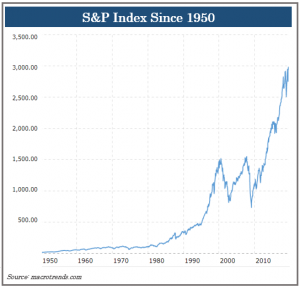
Since 1950, the S&P 500 has undergone 37 separate stock market corrections of at least 10%, not including rounding (i.e., declines of 9.5% to 9.9%). Considering that there have been over 69 years since the beginning of 1950, this works out to a correction, on average, every 1.87 years. (Source: The Motley Fool 5/2019)
2. The average length of those corrections was about 6 months.
According to data from stock market analytics firm Yardeni Research, the S&P 500 has spent 7,135 calendar days in correction since the beginning of 1950. Since then, there have been 37 corrections (of at least 10%). This works out to an average resolution time of 192 days, or slightly more than six months. Of these 37 drops in the market, 23 of them have resolved in 104 or fewer days, with only seven lasting longer than 288 days. 11 of the 14 instances that lasted longer than 104 days occurred between 1950 and 1984. (Source: The Motley Fool 5/2019)
3. “Rally” days outnumber correction days 2.55-to-1 since 1950.
Since the beginning of 1950 until May 13, 2019, there have
been a total of 25,335 calendar days and over 69 years of data. During this
time span, the S&P 500 has spent 7,135 of those calendar days tumbling from
a peak to a trough. This means that for the other 18,200 calendar days, the
S&P 500 has spent its time rallying from these correction lows. This ratio
of upward momentum (18,200) to correction (7,135) is a healthy 2.55-to-1.
(Source: The Motley Fool 5/2019)
Key Points
1. Market volatility is not the same as market risk. 2. Corrections are a part of the investing experience. 3. Beware of media magnification 4. Avoid making emotional decisions 5. Focus on your personal goals and call us with any concerns.
Big up days occur within two weeks of big down days 60% of the time.
J.P.
Morgan Asset Management releases an annual report
titled, “Staying Invested During Volatile Markets.” This report looks
at the S&P 500 over the trailing 20-year period and calculates what an
investor would have made had they stayed invested, rather than trying to time
the market by jumping in and out when they saw the first signs of trouble.
Oftentimes, missing the S&P 500’s 10 best days means losing more than half
of your would-be 20-year returns, missing around 30 of the best single-session
gains, resulting in a loss over the 20-year
period. (Source: The Motley Fool 5/2019)
An
interesting observation in this annual report is the timing of when these worst
days and best days occur. Although it has varied slightly from report to
report, since the trailing 20-year dates being analyzed are changing, roughly
60% of the S&P 500’s top single-session gains occur within two weeks of its
10 largest single-session losses. This means that selling equity positions
during big down days may cause you to miss out
on the market’s biggest single-day rallies, which are impossible to time.
Beware
of Media Magnification
One of the
biggest challenges investors face is how to tune out the magnification of
financial issues by the media. With thousands of media outlets all
thirsty for viewers, some outlets resort to scare and fear tactics to attract
an audience. Know that volatility is a part of the investment experience,
however, it can still become difficult to make rational investment decisions
when the markets are fluctuating. During these times, it is prudent to resist
the temptation of watching news reports and obsessively watching your portfolio
performance. Adhering to a long-term investment plan often requires taking the
news with a grain of salt and putting spur-of-the-moment advice of others on
the back burner.
Too
often emotion, not logic, can overshadow investing habits, so the first step in
declaring this mental independence is realizing how these influences, known as
biases, affect us. Sometimes, the closer
you put a short-term lens to your investments, the more likely you consider
decisions that deviate from your long-term strategy.
What
should an investor
do in a volatile market?
In times of crisis, many people tend to overreact and sometimes do not make the
best decisions. During volatile markets, it might be best to revisit your
plan. Remember panic is not a plan.
When equity markets
experience unnerving fluctuations, we suggest you ask yourself three questions:
Have my financial timelines
changed?
Have my financial goals
changed?
Has my risk tolerance
changed?
If you answered “YES” to any
of these questions, then it is wise to discuss these changes with us. An
investor needs to be prepared to build a plan that includes risk
awareness. One of our primary
responsibilities as your financial advisor is to consistently keep in touch
with you and monitor your situation. If
you have concerns, some questions to ask us include:
Can we review my financial plan?
Can we revisit my risk tolerance?
Are my investments diversified?
What are my fixed income investments?
Has the volatility presented any good opportunities?
While equities have risen, the continuing backdrop of a weakening
economy, trade war fears and interest rate concerns always offer the
opportunity to recheck your plan. Today’s traditional fixed rates might not
help many investors to achieve their desired goals, so most investors may still
need to include a strong mix of equities. Markets can continue to rise but they
also could head lower.At the end of the day,investors
should always put their primary focus on their own personal goals and
objectives. If anything has changed for
you please let us know.
Let’s focus on YOUR
personal
goals and strategy.
Our primary objective
remains to continually understand our client’s goals and to match those goals
with the best possible solutions.
Our advice is not one-size-fits-all. We will always consider your
feelings about risk and the markets and review your unique financial situation
when
making recommendations. If you would like to revisit your specific holdings or
risk tolerance please call our office or discuss this at our next scheduled
meeting.
We pride ourselves in
offering:
consistent and
strong communication,
a schedule of
regular client meetings, and
continuing
education for every member of our team on the issues that affect our clients.
A skilled financial advisor can help make your journey easier. Our goal is to understand each of our client’s needs and then try to create a plan to address those needs. Should you need to discuss your investments, please call our office.
If you’re like most parents, completing that to-pack for college checklist can seem completely overwhelming. But as you get closer to the finish line, it also becomes a challenge to think about how your life- and your student’s life- will change.
For those students on their own for the first time ever, there are a lot of changes around the corner for them. Things they might not have had to think about before, such as what happens if they get into an accident on or around campus? What happens if they need medical attention? Who is allowed to make medical decisions for them?
While you as the parent have served in that primary role for a long time, remember that if your student has hit age 18 and is moving out to attend college that decision-making power does not automatically default to you.
If your child is out of state at college, make sure you add one last thing to your “must-do” list: a healthcare power of attorney. In addition to packing a copy of the health insurance card and important phone numbers your child might need while away at school, it’s key to have these documents created before they go.
While no parent wants to think about something happening to their student, it’s not that difficult to set up a plan to protect them in the event of an emergency. A properly-drafted plan ensures that you get a phone call when something happens to your student on campus and that you can, legally, be brought into the situation to help make medical decisions.
Far too many students head off to their new campus dorms without thinking twice about this issue. While for many the need for a healthcare directive won’t be an urgent matter, it’s worth having that plan in place just in case something happens. Remember, your 18 year old now legally has the right to make decisions, including those related to medical care, on their own- if you’d still like to be involved, make sure you set aside some time to talk about a healthcare directive that will give you peace of mind after they move in.
One of the reasons we don’t do our financial planning, tax planning or estate planning, is because we don’t really feel moved by the possible future. A Harvard business report (which you can find here) showed that people will make better decisions when they stopped seeing their future selves as “strangers.”
I was reminded of this as I played with the FaceApp, which has been making it’s way around social media lately. (Yes, I am aware that the Russians may now have my likeness, but I’m pretty much everywhere on the Internet anyway, why not one more place? I’ve since deleted the app anyway.)
It was eye-opening to see what I may be looking at in the mirror 30 to 40 years from now. In fact, I also found it insightful to see what the app had to show for my likeness 30 years ago. What kind of legacy do I want to leave behind? What is 83-year-old Neel trying to say to 43-year-old Neel? And for that matter what does 43-year-old Neel want to say to 13-year-old Neel? What about you? What would you tell yourself you get the opportunity speak to yourself 30 years ago? What do you want your legacy be? And how we accomplish that? That’s where we can help. If we get together I would love to hear your goals, dreams and wishes. Maybe that person in the picture doesn’t have to be such a stranger.
Finally, we celebrated my mother’s birthday over the weekend. My maternal grandfather (Dada) sat next to me at dinner. We decided to use my FaceApp picture and do a side-by-side with his picture. Check it out below. Made me think – maybe I didn’t need the app after all. Feel free to reach out if you want to chat about your future, present and/or past.
So you don’t want to sit down and draft a will- or maybe even make the appointment with your attorney. If this is you, you’re not alone.
Numerous studies have undertaken the question of who has a will and
other key estate planning tools in place to protect them in case of a sudden
accident or incident. Lexis Nexis says that 55% of adults have no plan for the
transfer of assets when they die or a legal will. That number spikes even
higher among African Americans and Hispanics. You might anticipate that those
with higher incomes are more likely to have an estate plan pulled together.
However, one recent study found that people who had incomes of between $100,000
and $149,000 had a will less than 10% of the time.
Although that number spikes to 15% for those who had an income that goes
beyond $150,000, not having a will can expose your loved ones to unnecessary
challenges. Not having a will could mean that your loved ones have to go to a
court proceeding known as probate.
This can become more complicated and lead your loved ones to face
challenges they didn’t need to if you had sat down with an experienced lawyer.
There’s no doubt that answering questions about your future and especially
about your own mortality can be difficult, but they also aren’t questions you
want to leave behind for your loved ones to handle in a time when they are
grieving.
A key component of your estate plan’s success is being able to keep all the details organized. This helps you to make the best decisions on behalf of you and your family, and enables someone to find these critical documents if something happens to you.
Getting things organized can all also help you identify when there are gaps in your current estate planning. Once you know the gaps, setting up a meeting with a NJ estate planning attorney can help you cover all your bases with your incapacity, estate, asset protection, and business succession planning.
If you were to pass away suddenly, for example, this can save your loved
ones from spending critical time searching for important documents in an
already difficult period in their life. Here are a couple of top tips to stay
organized:
Keep a binder
to store all of your information, including separate entries for cars, real
estate and other personal property.
Keep track of
whether or not you’ve spend any amount on improvements, whether or not there is
any debt against it, and the underlying value of the item.
Take a look at
each asset you own and decide whether or not this is something worth keeping.
You might decide to sell this item now so that loved ones are not left with a
financial burden in the future.
Consider for
the assets that you decide to keep, what would happen to that asset if you were
gone.
Thinking about these decisions now can make it much easier for your
family to go through the process of closing out your estate in an organized
fashion.
Are you thinking about how you can best leave behind a legacy of financial support and love for your family, but haven’t taken the necessary steps to put together an estate plan? According to plenty of research, you’re not alone. Estate planning is often an overlooked as an opportunity to protect your loved ones and yet it can also be one of the most important things you do, not just to protect your future beneficiaries but also to protect your own interests in the future.
There are several different steps that you can take to ensure that your assets and money don’t end up being spent on taxes and legal fees, rather than being used to support your family. Another common misstep that can be made in the estate planning process is forgetting to line item name the prized possessions that you hoped to pass on to certain loved ones.
You don’t want these items ending up in the wrong hands. Although your
dreams and goals might change as you move through varying stages of life, and
add or remove certain people from your world, one thing never changes: to
achieve any goal or dream, you have to have a plan. Your dreams likely reflect
what you’re hoping for yourself in your older years, in retirement and also
what you hope for your children as far as what you leave behind for them as
beneficiaries.
Sitting down with an experienced and dedicated estate planning lawyer
gives you the chance to answer all of these questions with a knowledgeable
professional who knows many of the most common obstacles and missteps made by
people approaching estate planning.
Over the past few years, Disney has been creating live-action versions of their animated hits. Most recently, one of my personal favorites, The Lion King premiered. Being one of the most iconic Disney movies of all time, there is no way I can miss a chance to see this movie with my kids. There are many life lessons the movie teaches you, like: the importance of being cautious and mindful of who you trust, the effects of losing a loved one, learning that lost loved ones will always be a part of you, and more. Among the many takeaways from this movie, there is certainly emphasis on one thing: the circle of life. We are born, we grow up, we grow old, and we pass on leaving our legacy behind us. When leaving our family behind us, we want to make sure that our loved ones can “Be Prepared” for their future. Family disputes, such as those between uncles and nephews, are all too common (one of the reasons Estate Litigators get paid so much!)
Just as life begins, it comes to an end, and when it does end, we want to be sure that everyone we hold dear to us about will be taken care of. “Hakuna Matata for the rest of your days” may not be 100% realistic, but your planning need not be difficult. I would be happy to help make your planning easier.
Americans are notoriously conflicted when it comes to end of life estate planning. Thinking about the future of those we leave behind and confronting our own mortality is difficult, and yet it’s also a key aspect of your financial management necessary for the long term security of your loved ones.
This is why it might come as no surprise to you that only one out of every 10 people living in the United States currently even has an estate plan. The problem with this is that many Americans do recognize that having an estate plan or at least the most document, a will, is important.
A 2019 survey conducted by Caring.com found that 57% of US adults don’t have a living trust or a will in their estate planning. Furthermore, one age category in particular garnered top results for skipping out on these key estate planning documents. Only one out of every five 18-34 year olds indicated that they had an estate plan in place.
Over 1,000 adults participated in the study and 76% of them felt that
having a will was important, but so few of them have actually taken the next
step to do it. The four most common reasons why Americans don’t have a will,
according to the study, include:
They just
haven’t gotten around to it.
They don’t
believe they have enough assets to leave behind to anyone.
They don’t
know how to do it.
They perceive
that it’s too expensive.
Sitting down with an estate planning lawyer can help to remove some of
the confusion and misperception of putting together a will.
Have you already heard about the various types of estate planning tools and documents most commonly created and referenced by people in your state? There’s no doubt that living trust has turned up in your search of key estate planning documents, but how do you know if you need one or not?
What’s the primary benefit of establishing a living trust? And is a will enough to accomplish your estate planning goals?
Most people choose to establish a living trust because it gives them
some level of control and flexibility over what happens with beneficiary
designations, the structure of the trust and key people involved in the
process. An irrevocable trust, on the other hand, can be created once and
cannot be altered once established. Those people who may have interests now
that they wish to protect and add some layer of privacy and remove from
probate, enables them to structure the living trust so that it matches the
needs of your life now, but can later be updated.
The circumstances of your life are likely to change over the course of
the years. You might know that you need a living trust right now to give you
some level of control, privacy and protection from probate, but it’s also
likely that you might want to update some things inside the trust or eliminate
certain provisions in the trust as your beneficiaries get older or as your
unique needs alter. Having an established relationship with an estate planning
attorney can assist you with this process because a living trust is a valuable
tool to return to as your life circumstances change.
Having an estate plan for your business is just as important as having an estate plan for your individual purposes. There are many different components that go into a business estate plan including a will, a living trust, a financial durable power of attorney, a succession plan, a buy/sell agreement, and life insurance.
Hand writing Time to Plan concept with blue marker on transparent wipe board.
All of these can be discussed directly with an experienced attorney. Your will and your living trust are the cornerstones of your business estate plan.
A will enables you to name who you wish to receive your assets, including your company, if you wish upon your death. A living trust is similar to a will in that it allows you to decide who will receive your assets when you pass away, but this is a private document that has benefits when compared with a will. A financial durable power of attorney enables you to authorize an agent to act on your behalf if you are unable to do so for yourself.
Your succession plan which might also include considerations of a
buy/sell agreement and life insurance is your opportunity to outline what will
happen to your company in the future if you were to leave. Many people
anticipate that they will continue working in their business forever. However,
it can be a big mistake to assume that you will always be able or interested in
working on your business. Scheduling a consultation with an estate planning
attorney who has familiarity with adapting and creating business succession
plans should be the cornerstone of the next steps that you take in planning
your company’s future.
With the rising cost of healthcare and all data showing that many people will need some form of LTC in their older ages, it’s costly to assume that any of the three myths listed below are true. Yet plenty of people are under the impression they don’t need an LTC plan or Medicaid planning, giving them limited options when they or a loved one needs to enter a nursing home suddenly.
Myth #1: Medicaid or Medicare Will Cover Me
Medicare does not cover the vast majority of expenses needed for LTC. And Medicaid requires completing a careful application process. Overlooking the need to plan outside of this can be a big mistake or can require Medicaid crisis planning that doesn’t allow you to exercise all your options.
Myth #2: I’m Covered by Other Insurance
Don’t expect that your HMO or disability insurance will kick in to cover most of your long-term care expenses. This leaves you with little to no coverage at all, and those LTC bills can rack up quickly. It’s important to realize that in order to protect your personal assets and savings, you need something outside of existing disability or health insurance coverage.
Myth #3: Only the Elderly Need It
Did you know that a good portion of people who exercise the benefits in a long term care insurance policy are those who aren’t even close to retirement age? Even a serious car accident could leave a young person in need of LTC support or a nursing home stay. Ignoring the potential for an accident or disabling condition in younger years could be catastrophic.
If you want to work through possible planning options, a good time to speak with your estate planning attorney can be set up now. A lawyer can help explain to you some of the long-term plans you can put into place to help protect you should the need for LTC arise.
Retirees today seem to be confused about how much to set aside for long term care. Fidelity Investments shows that the cost of paying for healthcare expenses alone could go as high as $285,000 for an average retired couple at age 65.
Those health care expenses, however, don’t include long-term care. Long
term care refers to two different types of support; the first is services for
someone who has severe cognitive impairments or requires ongoing supervision
for safety reasons, and the second category includes services for someone who
needs help with at least two activities of daily living.
Those activities of daily living or ADLs include toileting, bathing, transferring, eating, continence, and dressing. It’s estimated that over 15% of people approaching their older ages will have expenses for long term care in excess of $250,000.
Most people assume that Medicare will kick in to cover these costs or
that they won’t need long term care. Both of these can be costly assumptions to
make. You’re better off finding an experienced lawyer to help you understand
what will and won’t cover your expenses so that you can approach the situation
with clarity and make the right decision.
Have you already set aside money to help support you in your older ages
and to pay for long term care? If not, it may be an appropriate time to discuss
Medicaid planning with an experienced and knowledgeable estate planning lawyer.
More people today recognize the potential impact of long-term care because most children of baby boomers have experienced it first hand by helping their loved ones with medical issues associated with aging.
Long-Term Care – New chalkboard with outlined text – on wood
However, these children should also be careful to incorporate potential
planning sources for long term care in their own estate plan. The Genworth Cost
of Care Survey in 2018 found that a private nursing home’s average cost will
run your over $100,000 per year.
Given that the National Care Planning Council says that the average stay in a nursing home is 835 days, you need to be prepared for how expensive this could be if you were to have one long term care event. Considering that the US Department of Health and Human Services says that 7 out of 10 people will require some form of long-term care in their lifetimes, you need to be thinking about whether or not you can afford to self-fund.
Those who have taken no other action to prepare for long term care, such
as consulting with an estate planning attorney about Medicaid or purchasing a
long-term care insurance policy, are essentially set up to fund their own
long-term care if it were needed.
If you’re not sure what your next step is in crafting a Medicaid plan,
you don’t have to do it alone. Sitting down with a lawyer can present you with
options and give you a set of next steps.
Chronic illness is much more common than most people anticipate. There’s a good chance that it has already touched your life in some way. If your loved one is living with some type of chronic disease like Parkinson’s, Alzheimer’s or multiple sclerosis, you already should be aware of the fact that your estate planning should reflect these additional challenges.
According to reports, over 130 million Americans are already living with
chronic illness, and that number will increase to 157 million by 2020. A quarter
of people between the ages of 65 and 74 have already had their lives affected
by chronic illness, so the impact of chronic disease is significant.
Estate planning documents for those who have chronic illness are
imperative. If your loved one is already living with at least one chronic
illness, you will the need the same estate planning documents that most people
use as the cornerstone of their estate plan.
Having a partnership with an experienced estate planning attorney is
important, because if the chronic illness has already advanced significantly,
it could impede the loved one’s ability to understand and sign these legal
documents.
Some of the most common estate planning documents important for someone
with a chronic illness include, HIPAA releases, a living will, a health care
proxy, an order for life sustaining treatment and a financial power of
attorney. Schedule a consultation with an estate planning attorney today to
learn more.
The decision that you make to place a loved one in a nursing home can be a complicated one, and it probably required a lot of research and asking of questions on your part to determine that right facility. Unfortunately, elder neglect and abuse in nursing homes across the United States is not regularly reported by health care workers, according to a recent government watchdog report.
It is a federal requirement for those health care workers who become
aware of elder abuse to report it as soon as possible, but the US Department of
Health and Human Services and the Office of the Inspector General found that
many nursing homes across the country did not report elder abuse in about one
of five potential cases.
It is expected that the elder population will increase significantly by
2050, reaching a total of 84 million people. Sadly, in 2008 a report found that
one out of every 10 elderly individuals reported some form of neglect in the
previous year.
Another form of elder abuse is known as financial abuse. Financial abuse
can occur when someone attempts to take advantage of an elderly person by
trying to update their will or making other edits to their existing estate
planning documents. This can often come up in the context of an estate planning
lawsuit or dispute after the fact. Being involved with your loved one’s life
can help you identify situations in which he or she could be accidentally
exposed to elder abuse or neglect.
Getting the support of an experienced attorney to create documents, to
protect your loved one in advance can help to minimize the chances of this
financial and elder abuse.
Make sure you have documents set up to allow your trusted family members
or loved ones to make decisions on your behalf- an estate planning attorney can
help you put together power of attorney documents. These can help reduce the
chances of elder financial abuse.
Having an estate plan is an important part of your overall financial picture, especially if you’re a parent. A recent study found that plenty of parents are missing key components of the protective documents they could use in order to outline a future for themselves and their children.
Having a child is a big milestone in your life, but it also calls on you to think bigger about how you’ll protect that child if something happens to you. A will is the most basic of estate planning documents, since it allows you to determine who will be the minor guardian if something happens to you and your spouse in addition to outlining where your assets will go.
If you have children, you get to have a say in who will be their guardian. Most parents don’t want this process left up to the courts. You can choose who you want to step into this important role based on what is best for your family rather than what the court deems appropriate.
Sitting down with your spouse or the other parent to discuss this all-important role is recommended. Even if you are separated or divorced, there are important considerations in choosing a person who will be active in your child’s life if you are no longer around.
Finally, the person you choose to serve as the guardian for your minor should be aware of this fact and fine with serving in this way. Even if you believe someone would be the perfect fit to take care of your children if you’re no longer around, you need to make sure they are comfortable serving in such a role, too.
Schedule a meeting with NJ estate planning lawyer if you’re missing a will, power of attorney, or other documents.
Too many people are under the impression that asset protection planning is only relevant for the very rich who want to downsize their tax bill. The truth is that every family benefits from asset protection because this is a legal method of arranging your assets in a manner to protect them from future attacks like those from creditors or predators.
When done early, asset protection planning can be a firm shield against
challenges and problems. Asset protection planning can also help with other
aspects of your estate plan.
Benefits of asset protection planning extend far beyond the tax
advantages and can include benefits from Medicaid planning, protecting money
from adult children who may be irresponsible and need additional structure and
control for the money flow, planning for a child with special needs, and
protecting money from your own future creditors.
Far too many people who overlook all of these different aspects of asset
protection planning could expose themselves and their loved ones to unnecessary
risks that could have been prevented with a little bit of planning structured
by an experienced and knowledgeable estate planning lawyer.
If you are new to the concept of asset protection planning and are not
sure how this fits into your overall estate planning picture, schedule a
consultation today to sit down with a lawyer and discuss some of the ways that
your assets could be threatened.
Many people already know that the cost of nursing home or long term care in their older ages can be extremely high. The average cost of a nursing home in the United States can easily go above $70,000 a year, and according to a Georgetown University Medical Center study, this has risen even faster than the cost of overall medical care in some states.
The cost of putting a family member in a nursing home can be a
significant financial burden even for those Americans who have set aside
necessary retirement funds. But this can be a crushing and devastating
challenge for those who have not set aside the appropriate money.
The expense of nursing home care is a particular concern for those
people who do not have Medicaid coverage or long term care insurance. Annual
out of pocket expenditures for a nursing home can go well beyond $70,000, and
in certain states can be much higher. For a person who is not classified as
qualified for Medicaid or doesn’t have LTC insurance, this financial burden can
put pressure on loved ones as well.
According to the study, for-profit nursing home chains were the least
expensive whereas non-profit were the most expensive. For-profit and non-profit
facilities operated independently had similar costs. While the majority of
Americans are eligible for Medicare at age 65, this doesn’t cover many
important long term care costs. You need to have a long term care strategy set
aside and partner with an experienced and knowledgeable estate planning
attorney to discuss how this could affect your future.