What You Need to Know About Affording an Estate Plan

The majority of Americans don’t have a plan in place but estate planning is not only for wealthy individuals and business owners. A basic plan can include a power of attorney, a living will, and a will.

Fewer than one third of people living in the United States today have even one or more of these documents, according to a 2020 research survey by Caring.com. The perception of cost is one of the biggest hinderances to people scheduling a consultation with an estate planning lawyer, but in some cases, the perceived cost is much higher than the real cost.

Getting an estate plan in place requires you to do some work in advance to decide what you want to accomplish with your estate plan and to look for an attorney who offers the ability to complete all of those documents or strategies together. A standard will meets the basic needs of most people and often doesn’t cost as much as you think but this is a critical document because you will appoint who will oversee the distribution of assets and manage creditors, and you’ll name a guardian if you have minor children.

Wills can become complicated if you have advanced family dynamics, such as if you or your spouse have been married before or have a mixed family. But you’ll want to have the ability to discuss your options with an estate planning lawyer particularly if you want your loved ones to be able to avoid probate. Ask around and get recommendations for estate planning lawyer so that you have a broad reach in terms of the approach they take to your planning as well as the overall cost.

Your Home & Estate Planning: Avoid This Mistake

Sadly, far too many children face the loss of their elderly parents and then have to take on the complicated task of selling a parent’s home. In the event that the will states that the children will receive the proceeds from the real estate’s sale, there are two potential outcomes that could occur based on whether or not the parent had appropriate estate planning in place.

Either children are eligible to receive the full proceeds of the parent’s home with no capital gains tax responsibility or they will instead owe tens of thousands of dollars to the IRS by paying this. This inadvertent and simple mistake happens when parents add their children to the title while they are still alive. It makes sense that you want the house to be able to pass to your kids so you retitle it in their name as well as yours so that the house automatically transfers.

However, this perceived kindness can end up costing your beneficiaries thousands of dollars in unnecessary taxes. It is far better to have an estate planning strategy in place that can help you to accomplish these goals without generating massive tax liabilities. It can be very difficult to go through the process of discovering these challenges after the fact and you definitely don’t want your loved ones attempting to cope with this on their own. Make sure that you work directly with an estate planning lawyer and a financial professional to ensure that you’ve taken care of all of the details related to your estate planning so that assets like your home can pass as easily as possible to your loved ones.

Study Finds High Net Worth Individuals Preparing for Possible Tax Increases


Tax increases on local or the state level could be levied against real estate in the near future. A new CNBC millionaires’ survey identified that 43% of millionaires shared that they already pay too much in taxes. Many of those millionaires are bracing for a potential tax hike in the next year due to the new presidential administration.

The survey included 750 people who had investible assets of larger than $1 million. The wealthy expect some form of tax increases due to the new administration as well as soaring deficits and spending. Those who responded to the survey said they planned few changes in their financial strategies or investments due to potential tax increases.

However, 16% of them said that they planned to make changes to their giving or estate planning. If you are part of a high net worth couple or family, it’s a good idea to consult with an experienced tax professional in addition to an estate planning lawyer to discuss your next steps and to create a plan for potential tax increases.

No matter what changes are on the horizon, you could on your team of professionals to help you adapt and create a plan in line with state or federal changes or even shifts in your own strategy or family.

The support of a dedicated estate planning lawyer can help you navigate changes as they come and keep you abreast of important issues that arise in the state or federal planning landscape.


Irrevocable Trusts and Crummey Powers

If you created an irrevocable trust in 2020, you need to ensure that certain kinds of gifts that are made to the trustee to pay premiums are kept up to date. One aspect of an irrevocable trust that this influences are known as Crummey powers or annual demand powers.

This allows gifts to qualify for the gift tax annual exclusion and this means a written notice for any 2020 gifts or gifts in future years will then need to be issued. This can be very complicated if you have transfers made to multiple trusts in addition to outright gifts made directly to heirs.

You will then have to prioritize those gifts based on the terms of the trust and the dates to determine whether or not those gifts do indeed qualify for the annual exclusion. This can get even more complicated if you use other estate planning strategies, such as a generation skipping transfer tax.

This may require you to file a gift tax return to allocate the exemption for the GST and to ensure that the trust stays exempt from GST. As you can see, these strategies can be powerful and helpful for your estate plan but only when they are appropriately drafted, organized and followed through. For more support with advanced estate planning strategies, schedule a consultation with a trusted estate planning lawyer.

Tax Authorities Claim That Executors Undervalued Prince’s Estate


Controversy was generated when pop singer Prince passed away without a will or any other estate plan in place. Calculations from the IRS indicated that executors of the estate undervalued the overall assets inside by approximately 50% or $80 million.

According to the IRS, Prince’s total estate is worth over $163 million. The valuation that had previously been submitted by Comerica Bank and Trust, the administrator of the estate, was just over $82 million. According to court documents, the major discrepancy here relates to the recording interests and music publishing of Prince.

This generates a federal tax liability of over $32 million, which would roughly double the tax bill associated with the previous valuation. This would also include a $6.4 million penalty on the estate if it can be shown that there was indeed a substantial undervaluation of the assets.

The six sibling heirs of Prince have been caught up in this controversy since the pop singer passed away unexpectedly in April 2016. This has led to one of the most complicated and expensive probate estates in Minnesota. You can avoid this mistake by having a will and other basic estate planning documents in place well in advance of your passing

Should You Create an Irrevocable Trust for Your Spouse?

Trusts are a popular estate planning strategy because they accomplish multiple goals at once, including privacy, greater layers of control and allowing for support to the beneficiaries that you choose. When it comes to thinking about your taxable estate, you may be able to move some assets inside a trust for proper management, thus giving up control.

Creating an irrevocable trust now could help you to take advantage of today’s high exemption levels. Staying under the exemption amount means that you get money out of an estate now without any gift tax consequences and you can still enable access to the funds through a spouse with the remainder of the funds going to other heirs. These are called spousal lifetime access trusts or SLATs.

These are irrevocable trusts that have a spouse as a beneficiary and even grandchildren or children as remainder beneficiaries. Your spouse is eligible to tap into the assets inside the trust for education, health or general living expenses which can also benefit you indirectly. While you can use a separate SLAT created by your spouse naming you as the beneficiary, be careful about this being identical as this will raise questions with the IRS. For more information about this process, schedule a consultation with a lawyer.

Our estate planning law office can help you decide what kinds of strategies are most appropriate for your needs.

Is Now the Right Time to Use Your Lifetime Gift Exclusion?

If you currently own an asset that you anticipate is going to appreciate over the coming years, you may want to take advantage of exclusions that are available to you today.

The IRS has recently released guidance that indicates that you will not suffer a penalty for using up your gift exclusion exemption while you are still alive. If you pass away when an exemption is lower and had held on to an appreciated asset up to that time, the estate tax will be higher because a greater portion of the estate is taxable.

If you use up the exclusion, however, and Congress does not choose to move forward with lowering the lifetime exemption amount, you can still reap advantages from this for your loved ones because there will be less in your overall estate to be taxed when you pass away.

Remember, of course, that gifted assets do carry over a cost basis that goes to the person receiving the gift. You may be in a better position to hold on to the asset until you pass away so that your heirs can benefit from a step up in basis that it will receive in that time.

This also gives you a greater deal of security in case you were to need the money for an uncertain future, such as unexpected costs with long term care. Gifting appreciated assets is another strategy you may be able to leverage when it comes to gifting. It doesn’t sacrifice any economic security in the short term but remember that the person who receives this benefit must have the item for at least a year. Make sure you consult with your experienced estate planning lawyer to learn more about some of the strategies you can use for the purposes of protecting your estate.

What Is Portability as It Relates to My Estate?

The Tax Relief Unemployment Insurance Reauthorization and Job Creation Act was signed into law in December 2010. This made significant changes to federal estate taxes, generation skipping transfer taxes, and gift taxes.

This was the first time that the potability of an estate tax exemption was introduced. Portability is a concept that is only available to married couples. The amount of an estate tax exemption that is not used for a deceased spouse’s estate can be transferred to the surviving spouse in the event that the first spouse passes away and the value of their estate does not use up all of the exemption.

This then enables the surviving spouse to use the deceased spouse’s unused tax exemption in addition to their own exemption when the surviving spouse passes away. This is a federal level exemption and state level exemptions are only available in two locations, Hawaii and Maryland as of 2020.

The federal estate tax exemption is $11.58 million for those deaths that occurred in 2020. Exemptions are amounts that are subtracted from the total value of an estate and only the balance that remains after this is applied is subject to the estate tax.

Because of the substantial size of this in the United States, it is very rare for many people to trigger the estate tax amount. For more information about this might apply to you and various estate planning strategies you can use, set up a time to meet with an estate planning attorney.

What is a Charitable Lead Trust?

There are many different kinds of trusts and you might use one or more to accomplish the goals in your estate plan. Because trusts can be complicated and minor mistakes can prove very problematic in the administration of the trust, you should use the support of an estate planning attorney to create yours.

You can create tax savings without giving up the assets that you want your family to receive some day by using a charitable lead trust and a cause you care about. A charitable lead annuity trust pays a certain amount to the philanthropic organization or foundation of your choice and is most attractive when interest rates are low. A charitable lead unitrust, on the other hand, pays a variable amount each year based on the total valuation of the assets inside the trust.

With a unitrust, if the assets inside the trust increase in value, the payments made to your chosen organization go up too. You can fund your donation in a charitable lead trust using real estate, appreciated securities, closely held stock or cash. You’ll want to consult with your legal and financial advisor before deciding to move forward with a charitable lead trust. It is very important that all of the details are carefully evaluated and structured to leverage maximum achievement of your goals.

Can I Reduce My Estate Taxes by Paying for Education Now?

If you are looking ahead to your future estate taxes and looking for a strategy to minimize them, a consultation with an estate planning lawyer can help you to address many of the most common issues and concerns that come up in connection to this.

Savvy planning can make things easier for your loved ones in the short term but also can benefit you in the long term. Paying tuition or medical bills doesn’t count towards your annual exclusion or the estate tax exemption so long as the checks are written directly to the school or health care provider. This can help to reduce the size of your taxable estate and can help provide a valuable gift to your loved ones who may need the money for their education or their expenses.

Many people are currently reevaluating their charitable contributions and gifting to grandchildren to determine if the strategies they had in place prior to the pandemic are sustainable. If you make any short term changes that reduce your gifting strategy, you’ll still want to have a plan for revisiting these in future times to ensure that they align with what you intend to accomplish with your family.

During these uncertain times when there are many possible changes with estate laws in the works and a great deal of unknowns as it relates to the pandemic, it’s important to have relationships with trusted professionals like estate planning lawyers to allow yourself to make informed decisions as needed.

Have You Planned for Your Invisible Estate?

Many people often make the mistake of assuming that their will controls the distribution of their full estate. It’s easy to forget that certain aspects are automatically excluded under the terms of your will.

There are three common methods by which assets might be transferred to your beneficiaries after your death outside of what’s named in your will or what goes through the probate process in your state. These include beneficiary designations, a will or a trust or joint ownership with right of survivorship.

Beneficiary designations are common with IRAs, 401(k) plans, pensions and life insurance. The accounts are distributed directly to the beneficiary that you name on the form when you pass away and your will does not have any say over these benefits. If you own property as tenants in common with another person, your 50% of the property will follow the provisions in your will.

However, jointly owned property with right of survivorship generally goes to the surviving joint owner regardless of what is stated in the will. If you have questions about this process or how to leverage your own individual estate planning, schedule a consultation with an experienced and knowledgeable lawyer in your area today.

How Much Tax Could Someone Above the Estate Tax Threshold Pay?

When you pass away, your estate could be taxed above certain thresholds established on an annual basis. This has risen to $11.7 million in 2021 with an exemption that is set to expire at the end of 2025.

However, it is possible that legislative and fiscal pressures could push a change to occur sooner rather than later. This large exemption means that many people have put off the process of estate planning altogether but this could be a significant mistake.

The federal estate tax and gift tax is currently 40% on those amounts over the $11.58 million threshold in 2020. This is outside of the fact that some individual states can also levy their own estate tax. If the gift exemption is decreased by a lot by any oncoming legislation, this will make it very challenging for people with higher amounts of assets to minimize their taxable estates.

This is why it’s important to have an established relationship with an estate planning lawyer to help keep you aware of these issues and help you to navigate these circumstances when they occur.

Our estate planning law office can help support you as you move forward with your planning process.


Three Things to Care About Within Your Estate Plan

You want to keep administration and tax costs as low as possible but there are other items that should be important to you as part of your estate plan. These include yourself, your family and your philanthropic interests.

You might assume that your estate planning actually doesn’t have anything to do with you except that it’s your responsibility to verify that the assets you wish to pass on to beneficiaries can properly do so in your documents but this is a common error.

As your assets increase and as you grow older you face unique estate planning and asset protection planning concerns that should always be discussed directly with an attorney. Planning for the future needs of others can help you maximize lifetime advantages as well. The most common reason for carrying out your estate planning is to protect your family.

Your spouse should decide how the assets will be administered for the maximum advantage of the survivor if you are married. Your spouse will face heavy and new burdens when you pass away but if you have children, grandchildren, nieces, nephews or other family members, you’ll want to make sure that you have taken extra care to include them in your estate plan.

The final aspect of covering what’s most important to you in your estate plan are your philanthropic interests. Don’t overlook causes that advance many different aspects of society. It is likely that there’s something personally connected to you that could be included as part of your estate plan and you’ll want your charitable goals to be in harmony with the needs of your family. Make sure you discuss how to make these important distinctions and still accomplish your planning goals with the help of a lawyer.

What to Know About Estate Planning When There’s an Addict in Your Family

Having an addict in your family can be a very difficult situation and this can prompt numerous concerns around the process of estate planning and naming someone as a beneficiary who might not be in a good position to receive or use funds. Creating a written revocable living trust, naming the person in question as a beneficiary can be one way to accomplish your estate planning goals and still protect that person.

You can require, for example, that the trustee make any necessity related payments directly to the provider rather than cash being given to the beneficiary. For example, this might include a mortgage company or a landlord or a health insurance company. You can set aside specific standards for the trustee of the account regarding disbursements.

Some of the most common categories that you can authorize for the trustee include maintenance, education, health and support. This leaves enough room for the trustee to make some discretion but can also require some certain level of standard of living or other needs.

Include a provision that will name the entity or person who will be eligible to receive any funds remaining in the trust if the family member in question were to pass away. These are complicated and important issues to consider from an estate planning perspective. These should always be discussed with a trusted and knowledgeable estate planning lawyer.       

Should You Convert Retirement Accounts for Tax Planning Purposes?

Do you have a goal of keeping current family money in the family when you pass away? There are several different steps to accomplish in this, each of which can be discussed with an estate planning attorney. 

A person who has a current 401(k) or IRA account could accidentally leave behind not just the assets inside the account but a significant tax bill. There’s an income tax liability, for example, that comes with children inheriting that IRA.

This is because regular income tax has to be paid on distributions from all traditional retirement accounts in the United States. In the past, your heirs had the opportunity to stretch distributions received from this fund over the course of several years to reduce their overall tax burden.

However, the account now must be liquidated within ten years after the death of the primary owner of the account. You might need to think about whether or not converting traditional accounts to Roth accounts, which have tax free distributions, makes the most sense for your family.

For more information about this and to decide what other assets need to be involved in your comprehensive estate plan, it is best to sit down with an estate planning attorney and to create a comprehensive inventory of all of the assets and debt associated with your name. This can help you begin to answer some of the most important and difficult questions around the estate planning process.      

Untangling Intangibles

Many companies use intangible assets such as patents, licenses, computer software, branding, and reputation to earn revenues. These intangible assets have always been part of the economic landscape. We study the impact of intangibles on our ability to identify differences in expected stock returns and find no tangible performance benefit from adjusting for intangibles.
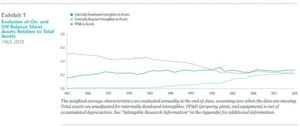
It is important to begin by distinguishing between two types of intangible assets. Under US generally accepted accounting principles (GAAP), externally acquired intangibles are reported on the balance sheet. They currently represent about a quarter of the reported value of assets for the average US company. These assets are accounted for when computing book equity. Internally developed intangibles, on the other hand, are generally not capitalized on the balance sheet. Instead, they are expensed and thus reflected on the income statement. The difference in accounting treatment is primarily due to the higher uncertainty around the potential of internally developed intangibles to provide future benefits and the difficulty to identify and objectively measure such benefits.1 After all, internally developed intangibles do not go through a market assessment, while externally acquired intangibles get evaluated in the competitive market for mergers and acquisitions, and at that time, they might already be generating tangible benefits for the company that developed them. For example, Disney bought the Star Wars franchise, an externally acquired intangible, in 2012, many years after the franchise began generating economic benefits for Lucasfilm.

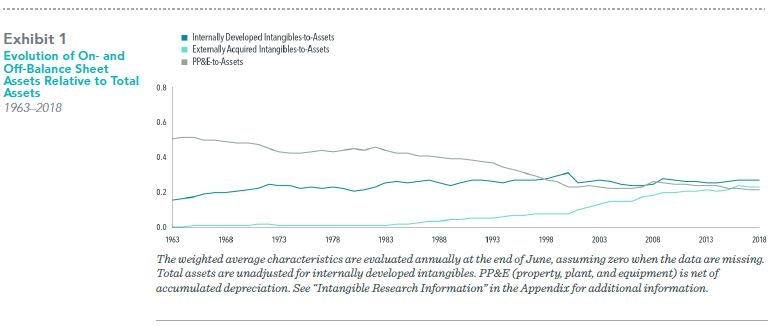
Some argue that to more effectively infer differences in expected returns across firms sourcing most of their intangibles externally and firms sourcing them mostly internally, we should capitalize internally developed intangibles. Several academic studies do that by accumulating the historical spending on research and development (to capture the development of “knowledge capital”) and selling, general, and administrative (SG&A) expenses (to capture the development of “organizational capital”). In the present study, we follow the approach suggested by Peters and Taylor (2017)2 and find that while intangible assets comprise more of companies’ assets over time, this stems mainly from growth in externally acquired intangibles. Estimated internally developed intangibles have not meaningfully increased as a proportion of total assets (see Exhibit 1).

Moreover, the estimation approach for internally developed intangibles has several important caveats in addition to the lack of market valuations. First, the estimation of internally developed intangibles assumes that the development of intangible capital can be captured fully through spending reported on the income statement. Second, the approach is critically dependent upon the availability of reliable and comprehensive R&D and SG&A data. However, we observe R&D data for about half of the US market even today. As a result, the estimated knowledge capital is zero for about half of the US market. Thus, we would adjust the value and profitability metrics of half of the market for knowledge capital and leave the rest unadjusted, potentially making firms in the adjusted and unadjusted groups less comparable, not more, after the adjustments. Further, while SG&A data are available for most US companies since the 1960s, the breakdown of operating expenses into cost of goods sold and SG&A varies often across companies and data sources, which might add noise to the estimation of organizational capital. The estimation approach can also produce noisy results because it applies constant amortization rates through time and does not allow for impairments. As a result, a company can be approaching bankruptcy and still appear to have billions of dollars’ worth of internally developed intangibles.

Because of all those different sources of noise, capitalizing estimated internally developed intangibles might not be helpful in identifying differences in expected stock returns. Our empirical research lends support to this expectation. Estimated internally developed intangibles contain little additional information about future firm cash flows beyond what is contained in current firm cash flows. Moreover, we do not find compelling evidence that capitalizing estimated internally developed intangibles yields consistently higher value and profitability premiums.

Given the large challenges with estimating internally developed intangibles, an alternative approach to infer more effectively differences in expected returns among
firms with different sources of intangibles might be to strip out externally acquired intangibles from the balance sheet. Our empirical analysis shows no compelling performance benefit of excluding externally acquired intangibles from fundamentals. Historically, the exclusion of externally acquired intangibles would not have generated higher value or profitability premiums. Therefore, we believe investors are better off continuing to incorporate externally acquired intangibles reported on the balance sheet and not adding noisy estimates of internally developed intangibles to value and profitability metrics.

Sources: Dimensional Fund Advisors LP is an investment advisor registered with the Securities and Exchange Commission.


Investing in FAANG Stocks: Should You Expect Unexpected Returns?

Investment returns have two parts: the expected return and the unexpected return. The expected return is the best guess of what will happen based on all the information currently available. The unexpected return is the surprise, the difference between what does happen and what was expected. Investors should base their portfolio decisions on expected future returns, not recent realized returns, and the two can differ by a lot.

Look at the returns on the so-called FAANG stocks–Facebook, Amazon, Apple, Netflix, and Google’s parent company, Alphabet. Over the 10 years from September 2010 to August 2020, a portfolio of the five stocks held in proportion to their market caps would have delivered an average annual return of 34.25% per year. That means on average, the value of the portfolio doubled about every 2.5 years.

Given their great returns over the last 10 years, what is our best guess of how the FAANG stocks will do over the next decade? Should we expect an average annual return of almost 35% again? Absolutely not. Who wouldn’t buy these stocks if their expected returns were 35%? But buyers need sellers. The demand driven by such high expected returns would simply push prices up and drive expected returns down to a more
reasonable level. For the same reason, I’m confident that if we could go back to August 2010, we would find few investors predicting the FAANG stocks would do as well as they did from 2010 to 2020.

So what does explain the FAANG stocks’ high realized returns? Their unexpected returns. Things turned out much better for them than investors expected. The companies’ cash flows over the last 10 years were much higher than investors expected 10 years ago, and their prospects looking forward from today are almost certainly better than investors expected they would be 10 years ago.

All this unexpected good news produced high unexpected stock returns over the last decade. It would be wrong, however, to expect high unexpected returns to persist. After all, it doesn’t make sense to count on good luck. The expected value of the unexpected returns must be zero.

In short, the past decade of extraordinary realized returns tells us little about the FAANG stocks’ future expected returns. And unfortunately, this is a general result. For most investments and most investment horizons—a month, a year, five years, even ten years—the realized return is driven far more by the unexpected return than the expected return.

–  Kenneth French, PhD
Director and Consultant

Sources: Dimensional Fund Advisors LP is an investment advisor registered with the Securities and Exchange Commission.

Checking Out of a Relationship or Home? Time for a Checkup!

In normal times and especially in a pandemic, many people use natural pause points to take stock of their lives and determine their next moves. For you, this might look like moving out of a home that was big enough to raise your kids in but too big to justify alone or with a spouse. It could include leaving a first or second marriage or trying to relocate to a new state where the conditions are more favorable to you financially.

No matter what moves you’re making in your life or you have on your horizon in the near future, it’s time for a checkup on your financial and estate plans. Your current plans might work for the conditions you’re in now, but making big changes means you need a step back to determine how your new life fits into the fold.

From thinking about your long term care plan to physically updating your will or beneficiary forms, there are a few tasks on this to-do list to consider when you’re “checking out” of your current conditions. It’s easy to miss some of these details, but they are important aspects of your life and plan. It’s best to partner with a dedicated estate planning lawyer to work through all the details and get the confidence that comes from having a comprehensive estate plan in place.

Are you concerned about how you move forward with your life in a way that protects your personal interests and your loved ones? You’re not alone. Estate planning lawyers in NJ can assist you with reviewing your current plan and making the necessary updates so that you have a future that’s bright for yourself and enables your loved ones to have an easier time moving your estate through the administration phase when it comes time to do that.

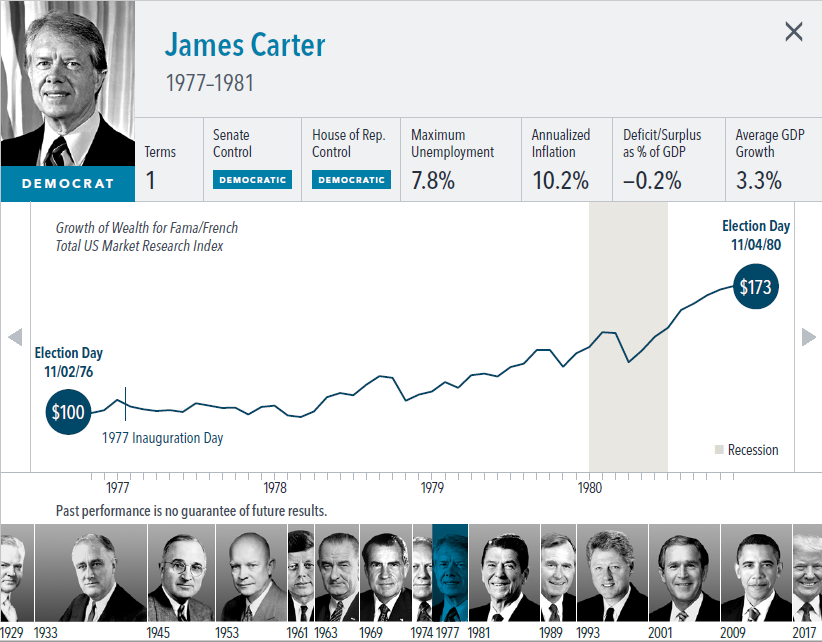
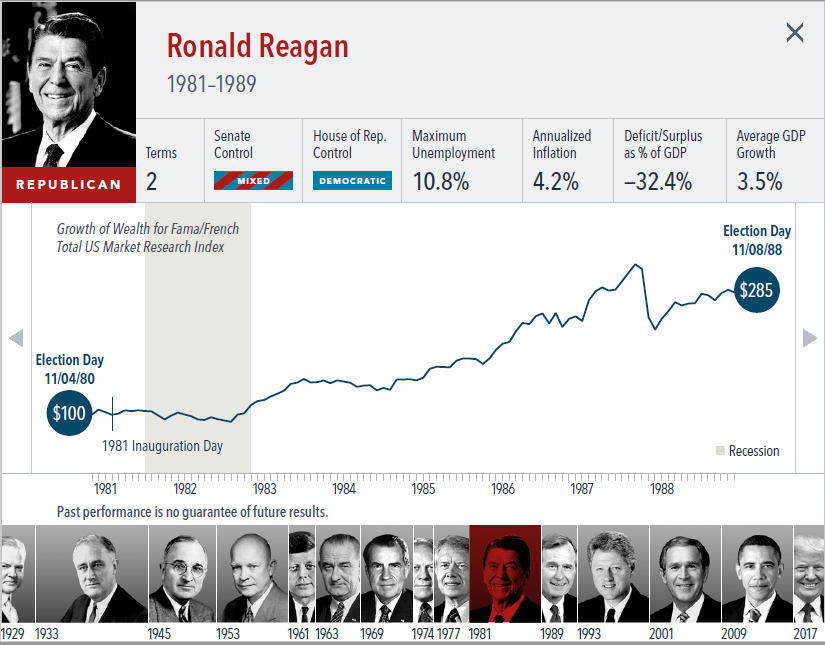
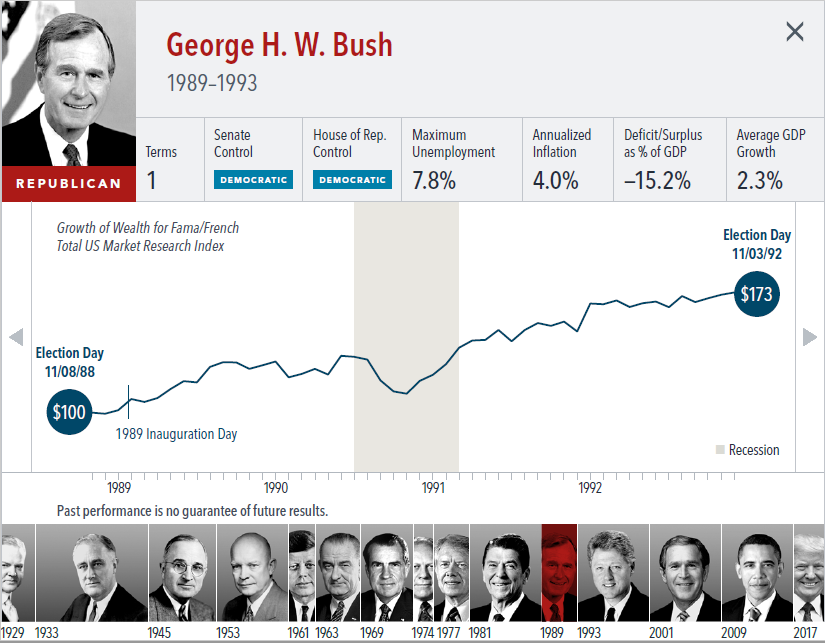
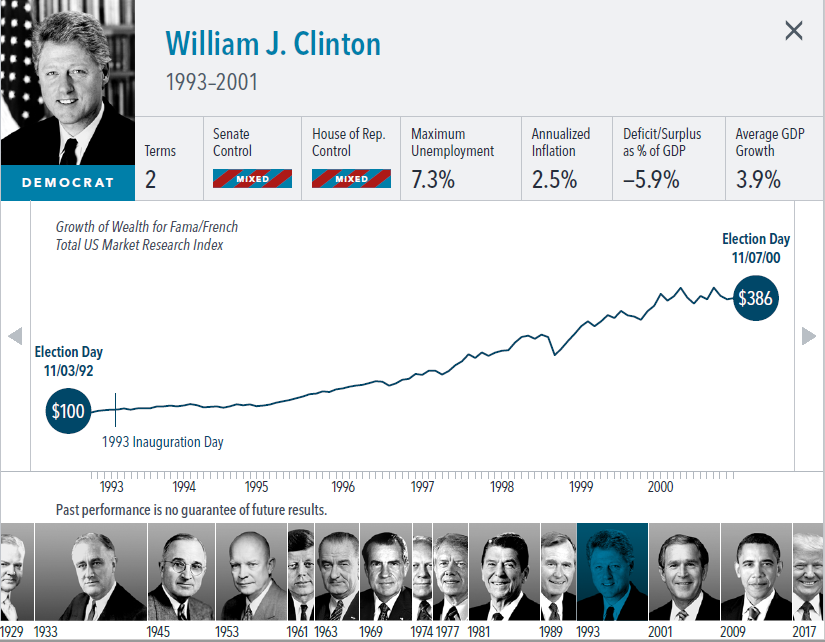
How Much Impact Does the President Have on Stocks?

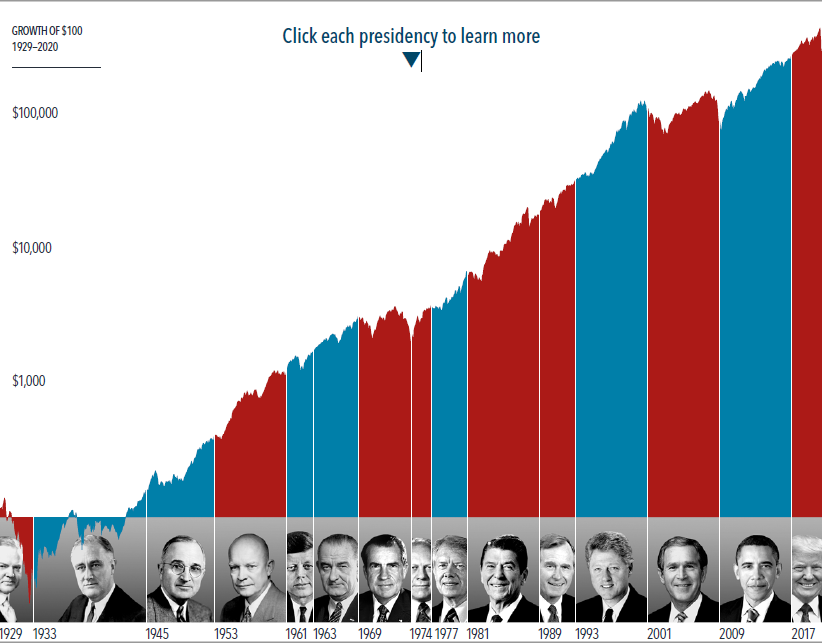
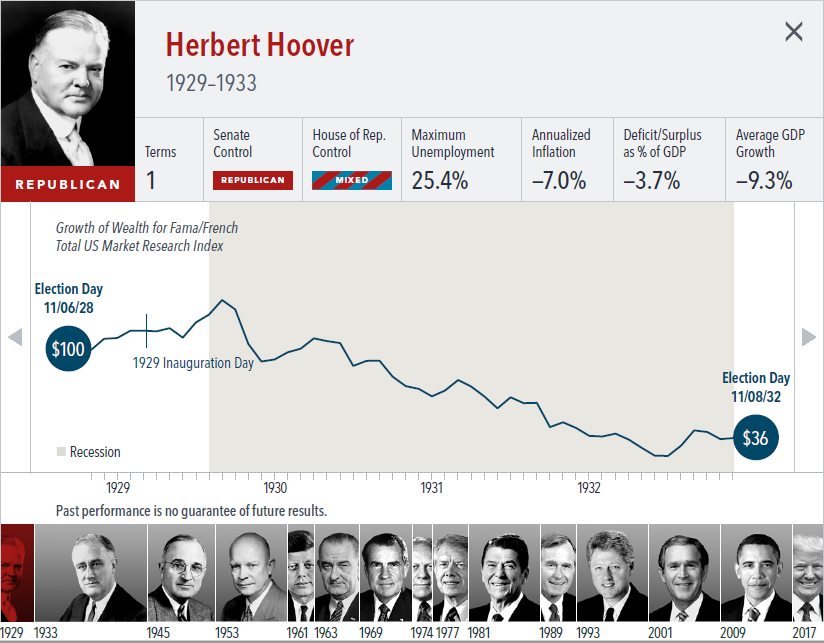
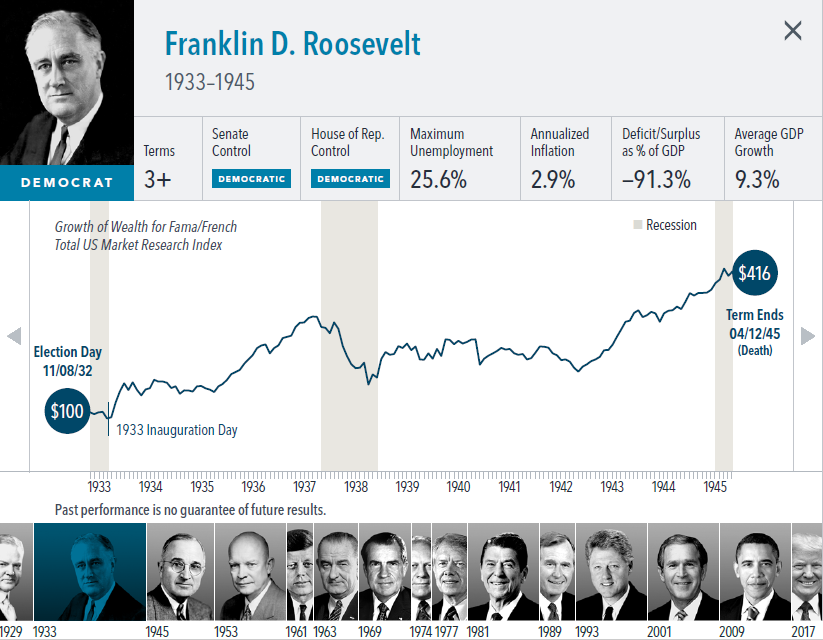
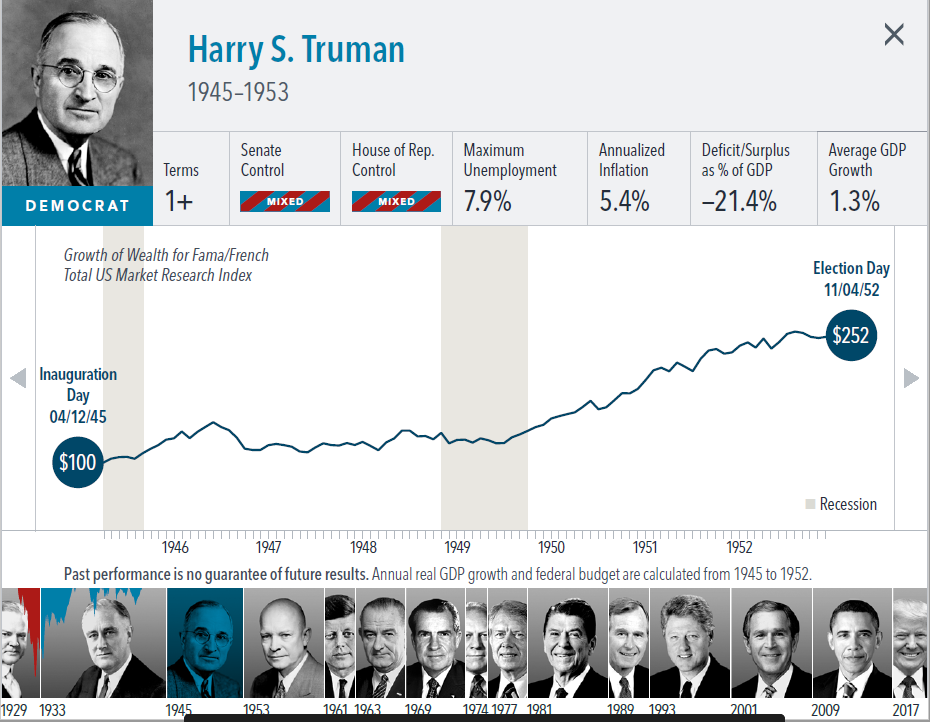
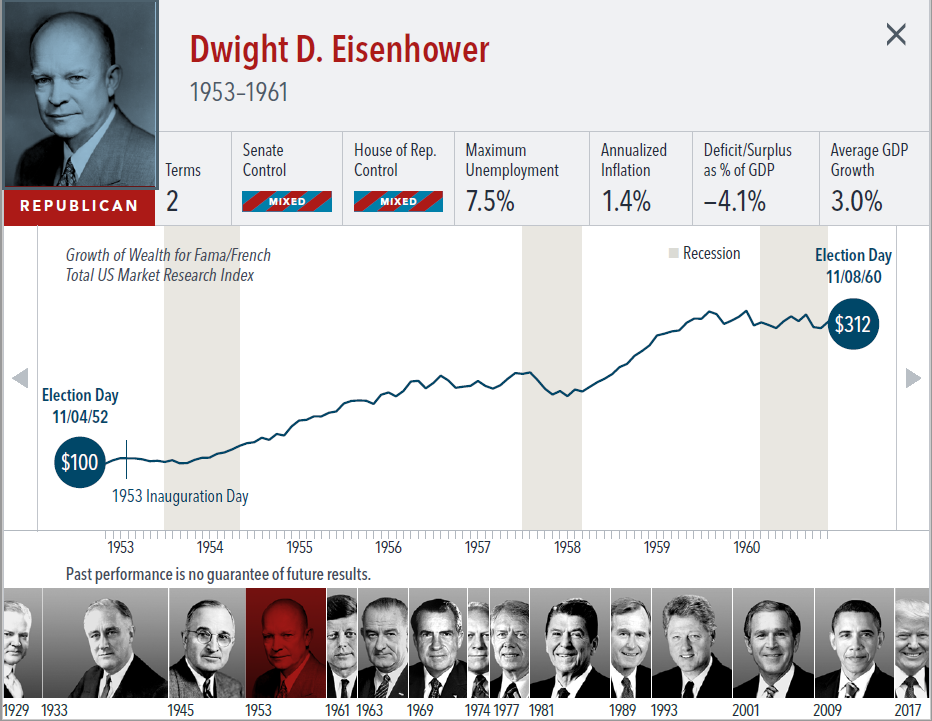
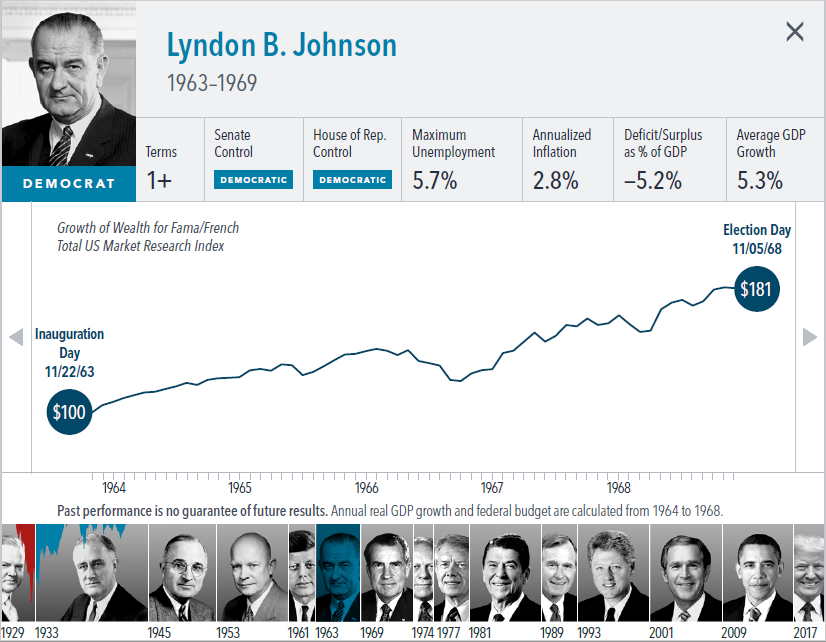
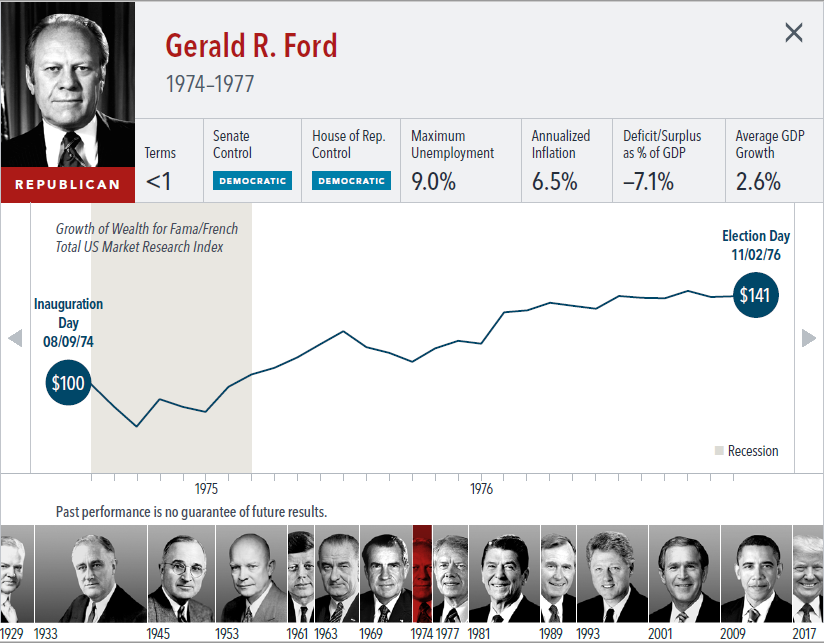
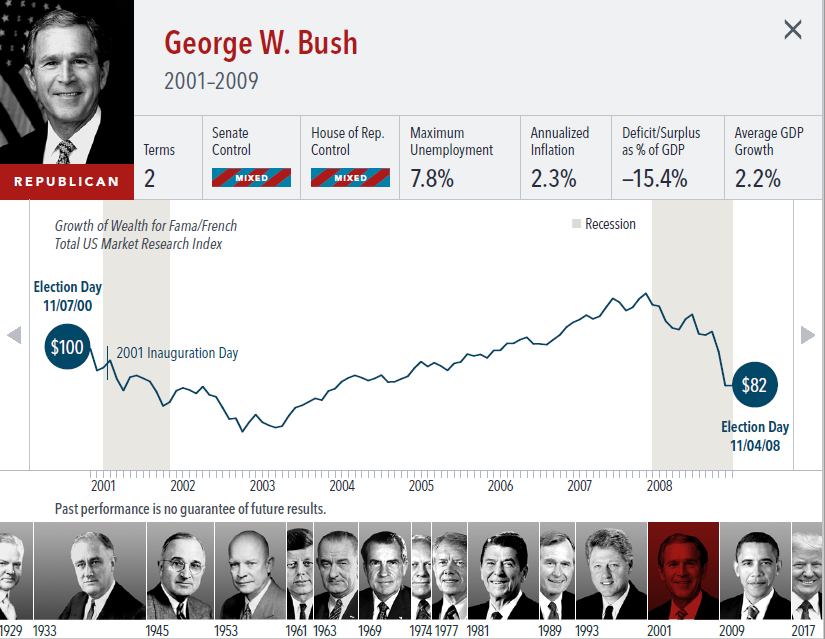
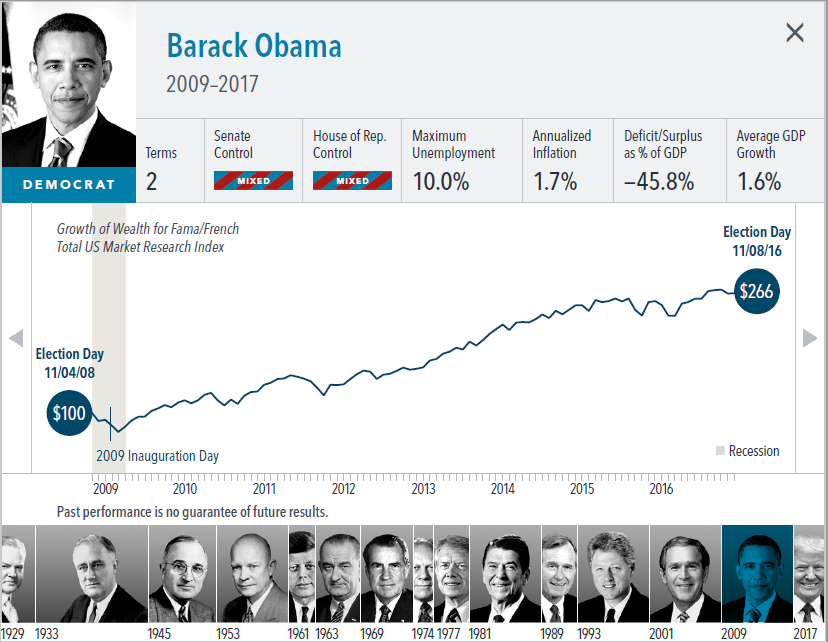
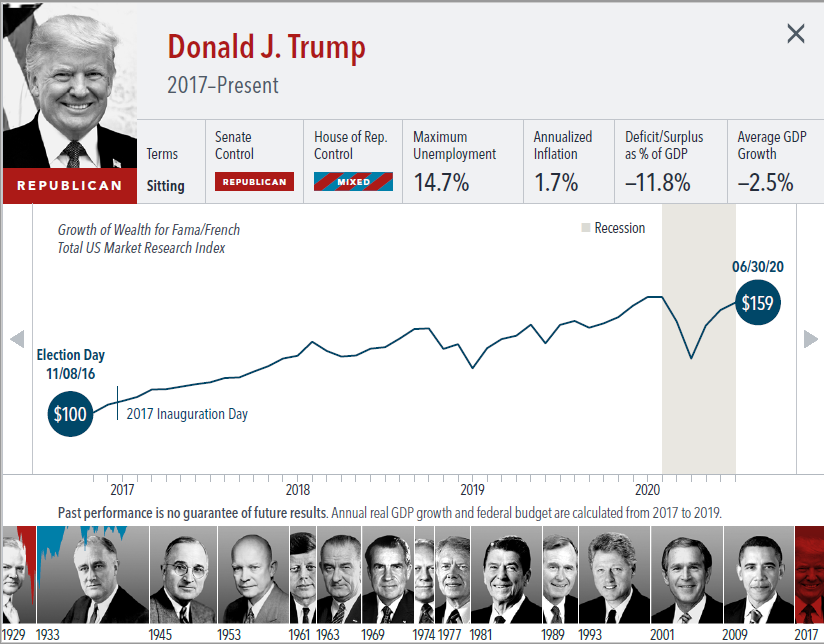
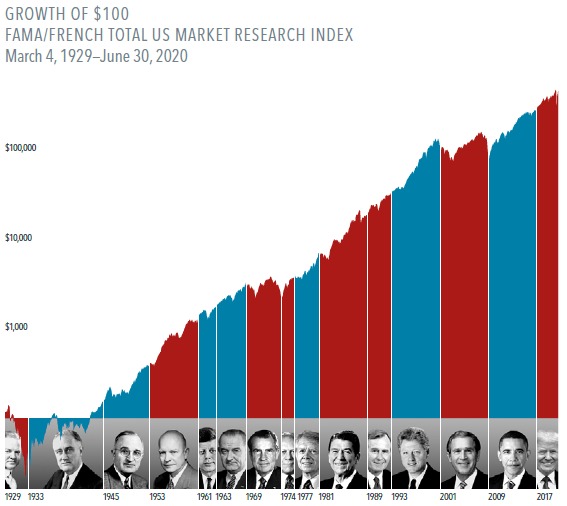
The anticipation building up to elections often brings with it questions about how financial markets will respond. But the outcome of an election is only one of many inputs to the market. Our interactive exhibit examines market and economic data for nearly 100 years of US presidential terms and shows a consistent upward march for US equities regardless of the administration in place. This is an important lesson on the benefits of a long-term investment approach.

NOTES AND DATA SOURCES

• This material is in relation to the US market and contains analysis specific to the US.

• In US dollars. Stock returns represented by Fama/French Total US Market Research Index, provided by Ken French and available at http://mba.tuck.dartmouth.edu/ pages/
faculty/ken.french/data_library.html. This value-weighed US market index is constructed every month, using all issues listed on the NYSE, AMEX, or Nasdaq with available
outstanding shares and valid prices for that month and the month before. Exclusions: American depositary receipts. Sources: CRSP for value-weighted US market return.
Rebalancing: Monthly. Dividends: Reinvested in the paying company until the portfolio is rebalanced.

• Growth of wealth shows the growth of a hypothetical investment of $100 in the securities in the Fama/French US Total Market Research Index. Growth of wealth for the full
sample from March 4, 1929, through June 30, 2020. Growth of wealth for each presidential term starts on the election day of each president up to but not including the
election day of a successor. For presidents who are not initially elected, the growth of wealth period starts from the day of inauguration up to but not including the successor’s
election day.

• Federal surplus or deficit as a percentage of gross domestic product, inflation, and unemployment data from Federal Reserve Bank of St. Louis (FRED). GDP Growth is annual
real GDP Growth, using constant 2012 dollars, as provided by the US Bureau of Economic Analysis. Unemployment data not reported prior to April 1929. Federal surplus or
deficit as a percentage of gross domestic product data is cumulative.

• US Government Presidential and Congressional data obtained from the History, Art & Archives of the United States House of Representatives. US Senate data is from the
Art & History records of the United States Senate.

• For Herbert Hoover, the federal budget is calculated from 1929 to 1932. Annual real GDP growth is calculated from 1930 to 1932; GDP data not available prior to 1930.

Sources: Dimensional Fund Advisors LP is an investment advisor registered with the Securities and Exchange Commission.

What History Tells Us About US Presidential Elections and the Market

It’s natural for investors to look for a connection between who
wins the White House and which way stocks will go. But as
nearly a century of returns shows, stocks have trended upward
across administrations from both parties.

• Shareholders are investing in companies, not a political
party. And companies focus on serving their customers
and growing their businesses, regardless of who is in the
White House.

• US presidents may have an impact on market returns,
but so do hundreds, if not thousands, of other factors—the
actions of foreign leaders, a global pandemic, interest rate
changes, rising and falling oil prices, and technological
advances, just to name a few.

Stocks have rewarded disciplined investors for decades,
through Democratic and Republican presidencies.
It’s an important lesson on the benefits of a long-term
investment approach.

Sources: Dimensional Fund Advisors LP is an investment advisor registered with the Securities and Exchange Commission.