Hey Buddy? Questions to Ask Before Going Into Business With a Friend

It’s exciting to think about the prospect of going into business with someone you already know, but this step should be taken carefully or you might wind up with a difficult working relationship and an impaired friendship. Here are some of the most important questions you should review when thinking about whether a friend equals an ideal business partner.

Hey Buddy Questions to Ask Before Going Into Business With a Friend
(Photo Credit: vanityfair.com)

  • How much trust do I have for this person? You’ll see that numerous experts compare business relationships with marriage. Are you willing to go through ups and downs, which are all part of running a business, alongside this individual?
  • How does that partner improve and build on your brand?
  • Does this person have a selling point or critical skill that you’re missing? It can be a good idea to work with someone who offers something that you don’t. If you’re missing executive experience, for example, perhaps look for someone who offers that.
  • What is their life position? It could be difficult to work with someone as a partner who is not in a stable life location. Although this doesn’t meant that your partner has to have all his or her ducks in a row, someone just coming out of a bankruptcy might pose risks for your company.
  • Would a pilot project work? Before committing to a full-on business together, maybe trying out a small version or pilot project will give you a sense of your strengths and weaknesses.

To talk more about concerns of a business at the startup stage, contact us through email at info@lawesq.net or by phone at 732-521-9455 to get started.


When to Think About Charitable Remainder Unitrust Alternatives

For many individuals approaching estate planning, charitable giving is going to factor into the equation somehow. The most popular way of passing on assets currently is through a charitable remainder unitrust, but it’s not necessarily the best option for everyone, although last year nearly $90 billion was held in U.S. trusts of this type.

When to Think About Charitable Remainder Unitrust Alternatives
(Photo Credit: lifehealthpro.com)

Here are some of the most common reasons that you might want to use something other than this trust vehicle for your charitable giving:

  • Tax Savings Today: You want maximize your current tax deduction. A charitable lead trust could be a better alternative for this situation, since you get an immediate federal income tax deduction when the gift is made. The tax deduction equals the present value of the future income stream.
  • You want the gift to begin now: Under a charitable lead trust, the client will typically gift the assets directly to a charitable trust. That trust then makes regular payments for a specific number of years or for life. Under a remainder trust, though, the charity doesn’t get anything until the trust’s term is up.
  • You want to see regular payouts: This is there’s a difference between a charitable remainder annuity trust and a unitrust. The annuity trust guarantees equal payouts throughout the length of the term (such as every year), which gives the person setting up the trust confidence that payments are being made at regular intervals.

When it comes to charitable giving, you have options. Contact us today to learn more via email info@lawesq.net or 732-521-9455 to get started.

For The Ladies: Special Estate Planning Considerations for Women

For the most part, financial planning and estate planning tools are very similar for men and for women, but there are several facts that result in special planning considerations for women as well. The root of these considerations is that in later years, women may face their own set of challenges.

For The Ladies Special Estate Planning Considerations for Women
(Photo Credit: businesshangouts.net)

To start with, women tend to live longer than men do. A woman may overlook the fact that odds are in her favor for outliving her spouse. In fact, according to the Census Bureau, nearly 40 percent of women over the age of 65 are widowed. That longevity may also lead to higher medical bills. When your financial future is built on a husband’s pension or Social Security benefits, the woman can face major challenges as a widow.

Women are also much more likely to provide care to children and elderly parents. Many women tend to take on this role for older parents, which can be emotionally challenging and a financial adjustments.

Women looking at estate planning should seriously consider where their income will come from in the future and what, if any, benefits they will be eligible for. If women are looking at caring for their own elderly parents, it’s also worth a look into the parent’s planning to see whether they have made plans for long-term care or factored in the financial aspects already.

A little advance work can go a long way in helping women live long and comfortable lives. To learn more about estate planning, email info@lawesq.net or contact us via phone at 732-521-9455 to get started.

Family Business: Steps to a Viable Succession Plan For Your Family Business (Part 2)

There is no doubt that working in a family business can be rewarding, but it might also come with some challenges. With regard to succession planning in particular, here are some of the top tips you need to consider when multiple relatives are coming to the same table on a family business.

Family Business: Steps to a Viable Succession Plan For Your Family Business (Part 2)
(Photo Credit: perthnow.com.au)

  • Make clear goals and objectives. Getting everyone on the same page with where the business “is” and where it’s “headed” is not easy, but you can bring things full circle by thinking about common goals and visions.
  • Create a process for making decisions: Don’t rely on the way you have always done it as a family. You may need more formal structure and written explanations of how decisions are to be made. Don’t forget to factor in your methods for resolving disputes. This can save you time and hassle in the future.
  • Generate a comprehensive succession plan that determines active and non-active roles for family members, establishes successors, and determine if additional support for that successor will be required from other family members. Documenting everyone’s role makes it easier.
  • Have both a business and owner estate plan. Don’t forget one or the other, as they are both important in a family business. Think about minimizing taxes and protecting assets together.
  • Determine the most appropriate avenue for transition. There are numerous options for buyouts or agreements, and this is something you definitely want to discuss with an attorney.

To learn more about how we can help clients with proper succession planning for a family business, call us at 732-521-9455 or send an email to info@lawesq.net.

Saving Taxes: Is a DING Trust Right For Me?

Like a lot of business planning strategies, it’s best that you meet with a legal professional to discuss the best tactics for your situation. One of those strategies might be a DING (Delaware Incomplete Non-Grantor Trust), a tool that is growing in popularity for managing and minimizing both federal and state income taxes. Especially for those individuals living in states with high income taxes, a DING trust is a powerful strategy for making the most of your assets without being so negatively impacted by taxes.

Saving Taxes Is a DING Trust Right For Me
(Photo Credit: america.schickhappens.net)

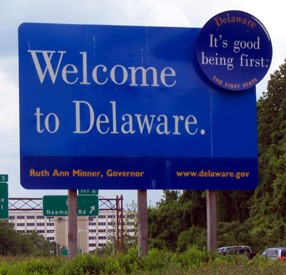
In a DING trust, a person can transfer assets (including some business interests) that produce a high level of income into a trust without triggering a state or federal gift tax. The state income taxes are actually transferred from the resident’s home state to a state where trust income is not taxed. There are several jurisdictions that have been used in the past for this purpose include Nevada, Delaware, and Alaska.

This type of trust is a great choice for someone who has significant portfolios that generate income or those individuals that live in a high tax state concerned about the tax implications of their assets. This form of asset protection gives peace of mind and confidence to those who use it. As of right now, New Jersey does not tax trust income if there are no resident trustees. Therefore, assets held in a DING trust may be exempted from high state income taxes (8.975% in New Jersey). For special tax planning, contact us for more details at info@lawesq.net or over the phone at 732-521-9455 to get started.
Common Reasons A Will Might Not Hold Up In Court

Especially if you have taken it upon yourself to write your will, it’s important to know that you have opened your heirs up to the risk of having your will contested in court later on. Here are three of the most common mistakes that result in a contested will.

Common Reasons A Will Might Not Hold Up In Court
(Photo Credit: 8gr.org)

Disinheriting Family Members Sans Explicit Instructions

The law tends to treat the distribution of assets relatively fairly when there are questions about intention or mistakes in the handling of the will. So, if you’re stipulating that you want to leave an individual out altogether, you need to make sure those instructions are crystal clear. You want to have this written by an attorney to reduce that chances that you have given such an individual room to argue in court.

Using Biased Witnesses During Your Will Signing

In many circumstances, you need to sign your will in front of witnesses in order for it to be valid. These witnesses may later be called I court to state that they were present and to discuss whether the person signing the will (you) had the mental capacity to sign such a document without any undue influence or pressure from other parties.

Potentially Lacking Mental Capacity to Sign the Will

One of the reasons that heirs (or those excluded) will contest a will is under the ground that you did not have the mental capacity to understand what you were doing. You must understand what property you own, your overall plan for passing on property, and who you closest family members are. Furthermore, a Living Trust, which preserves privacy, may be an option for those with a stronger likelihood of a contest in their future.

To learn more about wills and estate planning documents, contact our professionals at 732-521-9455 or info@lawesq.net.

Hoteliers & Moteliers: What Security Challenges Do Today’s Hotel Owners Face?

Hotel owners face a broad array of challenges when it comes to mitigating risks. Whether you’re a single motel or part of a chain, you need to be concerned with protecting and maintaining assets. You’ll need to be concerned with physical, human, and intangible assets.

Hoteliers & Moteliers What Security Challenges Do Todays Hotel Owners Face
(Photo Credit: e27.co)

Some of the major concerns that hotel owners are faced with include sabotage, natural disaster, injury, criminal activities, terrorism, and fire. On a more common basis, you might be concerned with injuries and claims or injuries on hotel property, or the theft of services or merchandise.

There’s no doubt that as a hotel owner, you frequently feel pulled in many different directions to deal with immediate problems and trying to prepare for the future. One of the best ways to reduce your risks is to consider whether a captive insurance company can help you with some of your concerns in the long run. Policies for a captive insurance company contain many of the same provisions as typical commercial insurance contracts but they go above and beyond by reinsuring your particular risk needs.

As an added benefit, maintaining control over that captive company may even give you investment control over assets for that company. If you’ve got risks that cannot be covered under the typical umbrella of a commercial insurance contract, you’ve got to look elsewhere. A captive insurance company may alleviate your concerns, protect your assets, and allow you to build a long-term plan. Email us at info@lawesq.net or call 732-521-9455 to begin.

Steps to a Viable Succession Plan For Your Family Business (Part 1)

Are you planning to keep the Family Business “in the family”? Did you know that family businesses now make up as much as 50 percent of the gross domestic product of the entire country? We’re not just talking about small storefronts or website companies, either. Over one-third of Fortune 500 companies are controlled by families in some sense. It’s critical that as a small business owner, you plan ahead for the future with a succession plan. Here are some of the most common issues facing small business owners with a family connection.

Steps to a Viable Succession Plan For Your Family Business (Part 1)
(Photo Credit: merchantcircle.com)

  • Align your family interests: As members begin to retire or hand off control to other generations, the interest alignment of these individuals becomes all the more important.
  • Generational transitions: Think about the future, because only one third of all family businesses actually end up passing the business on to the second generation. You might want to have alternative plans.
  • Interfamily disputes have the potential to dominate family-owned businesses especially when perception of needs is not lined up between key players. This becomes even more complicated when there is a death or divorce involved.
  • Retirement income: A buyout agreement doesn’t have to be complex, but it is harder to do with a family business because retiring individuals might be more focused on a balance sheet rather than an earnings capitalization model.
  • Estate and inheritance issues: While individual planning is important, there should also be plans in place that relate to the business.

All of these issues are just a sample of concerns for those involved in a family business. Contact our office today to learn more about our Business Succession Planning practice. Email info@lawesq.net or contact us via phone at 732-521-9455 to get started.

What Can An Estate Planning Accomplish That I Can’t?

In this world driven by do-it-yourself options, it might seem like you can handle just about anything. There are several things, though, that you definitely want to hand off to a qualified estate planner rather than attempting on your own.

What Can An Estate Planning Accomplish That I Can’t?
(Photo Credit: design55online.co.uk)

To start with, even the most basic of estate planning documents, a will, probably needs customization. If you’re using some form of template, trying to invalidate it could turn out badly if you don’t do it appropriately. This could mean that your wishes are totally ignored due to an overlooked accident. Each state has specific provisions and wording, so make sure you’ve gotten yours reviewed by someone in the know.

If avoiding probate is one of the goals you have set out for your estate, you really should consider a conversation with an estate planner. The truth is that there are numerous ways to avoid probate and to minimize the blow of estate taxes, but those can be complex and require the eyes of a trained professional. Don’t count on yourself for those strategies.

One of the biggest reasons to trust your planner is because laws in the realm of estate planning have the potential to change often. You most likely don’t want to read through laws and regulations to understand your opportunities and responsibilities, but attorneys are up to speed on all the latest changes. What you can do on your own is to generate a list of what you’d like to accomplish with your plans and draw up questions you have about the process. Being proactive goes a long way towards proper estate planning. To set up a meeting, email info@lawesq.net or contact us via phone at 732-521-9455 to get started.

Mid-Year Tax Planning Tips

While not much has come out in the first half of 2014 with regard to tax legislation, there are still some important tax planning opportunities to tap into. Mid-year is a great time to schedule in your financial and estate planning review to double-check that nothing has changed and to verify that you don’t need any additional components in your plan.

Mid-Year Tax Planning Tips
(Photo Credit: w2taxservices.com)

Income tax planning usually involves a mix of three separate strategies: earning income that is received with favorable tax rates, like that which comes from qualified dividends or long-term capital gains, delaying the payment of tax by deferring income receipt to another year, and avoiding income bubbles that bump you up to another tax rate.

One way to reduce your tax obligations and contribute to your future is to ensure that you’re putting money (and enough of it) into a tax-qualified retirement plan. Doing so means that you are deferring taxes on earnings until you actually take the distributions out.

Finally, a great mid-year step to take is to verify that you are keeping good records. While most people make this promise to themselves after a hectic tax season in April, they tend to forget about it until tax time rolls around again next year. Instead, make sure you’ve kept track of your charitable deductions to date, any extra income, and other tax-related details. It’s also a great time to set up a meeting with your planner to discuss more options, especially if you have other goals you’d like to meet. To schedule your mid-year review, call us at 732-521-9455 or send an email requesting an appointment to info@lawesq.net.

Charitable Choices: Gifting Retirement Funds at Death

Are you thinking about making a gift to a charity on your death? It might be a better option to instead consider gifting your retirement account, and there are a few different reasons for this. This can help to maximize the tax benefits for your estate, but also for the individual heirs benefitting from your estate.

Charitable Choices Gifting Retirement Funds at Death
(Photo Credit: bloomberg.com)

As of now, assets above the value of $5,340,000 that are outright transferred from a taxable estate are hit with a 40% tax, even though the individuals who receive those assets don’t have income taxes also taken out of that amount. There is, however, an exception to this, and it’s for IRAs, 401ks, and qualified retirement plans. They are categorized as ordinary income as distributions since the government has not yet taxed this money.

Gifts to charity are not subjected to the estate tax and are at the same time excluded from the taxable estate. The amount gifted to the charity can be deducted from your federal estate tax return to reduce your overall estate beneath the $5,340,000 referenced above. When done properly, this could mean that little or no federal estate tax is due upon your death, therefore meeting your goals of gifting charitably and maximizing the value of your assets for your beneficiaries.

To learn more about charitable giving and other strategies to accomplish estate planning goals, send us a message at info@lawesq.net or contact us via phone at 732-521-9455 to get started.

If It’s Good Enough for the Clintons, It’s Good Enough For You

The Clintons recently made the news simply for taking advantage of Estate Planning and financial planning strategies that maximize wealth and limit the encroachment of taxes. With an estate tax that has an upper limit of 40 percent of assets on death, it only makes sense for those with bigger estates to conduct some planning well in advance.

If Its Good Enough for the Clintons Its Good Enough For You
(Photo Credit: ihearttheclintons.tumblr.com)

One of the most important steps taken by the Clintons was the transfer of their New York house into a residence trust, a move they made back in 2011. These trusts have major advantages, including house value appreciation as an occurrence outside the taxable estate. The overall goal for many estate planning attorneys and other financial experts is to help build up the nontaxable estate as much as possible.

This transfer of ownership of the house specifically is a tool that could have implications for numerous Americans concerned about the tax hit on their estate. A sample strategy involving this plan is to divide house ownership in half and storing that ownership in two separate trusts. While continuing to live in the house, ensure that the trust is structured to pass on to heirs in 10 years. Remember, the growth value during that period falls outside your estate. At the end of the 10 year period, pay rent to the heirs if you plan to continue living in the house. Those rent payments are also shielded by passing outside of the estate, protecting them from tax.

For more tax-saving strategies and long-term financial planning, contact our office today. Call us at 732-521-9455 or send an email to info@lawesq.net

Is the New Jersey State Estate Tax Too Prohibitive?

Most people recognize that it can be costly to live in New Jersey, but they don’t realize that it may also be expensive to die here. Unless you have had a direct personal experience with some kind of estate planning, it’s unlikely that you understand the full implications of the state estate tax. It’s worth considering in advance to prevent a major hit on your assets and investments.

Is the New Jersey State Estate Tax Too Prohibitive
(Photo Credit: eracentral.com)

New Jersey is one of only two states (Maryland is the other) that collects both an estate tax and an inheritance tax. In the state of New Jersey, the estate tax is factored into any estate worth $675,000 or more and the estate tax includes stocks, bods, and real estate in addition to more common sources like savings or checking accounts.

A recent study from Fairleigh Dickinson University shows that New Jersey residents aren’t thrilled about the major tax hit on their assets, with 57 percent of New Jersey residents indicating their plans to leave the state on retiring since affordability is such a major issue. Are you one of the 57 percent? Estate tax planning using a DING trust, for example, may help to alleviate some of the impact on your estate by allowing you to transfer assets into a trust that avoids some of the negative implications of New Jersey taxes. To learn more about your options, contact our office today to discuss long term financial planning for your estate. Send us an email to info@lawesq.net or contact us via phone at 732-521-9455

Avoiding Estate Planning Mistakes: Unfunded Living Trusts

When used properly, living trusts can be valuable tools for passing on assets. When planned for early on, you can really maximize what a beneficiary gets out of a living trust. Unfortunately, individuals don’t always plan correctly with the living trust. If you forget to put any assets into the trust, for example, you’ll miss out on the opportunity for assets to be passed to heirs outside of the probate process. After the trust is set up, you’ll need to retitle assets into the trust’s name.

Avoiding Estate Planning Mistakes Unfunded Living Trusts
(Photo Credit: kiplinger.com)

Simply listing the assets you plan to transfer with a schedule attached to the trust may not be enough. The schedule is more like a notification of the assets you do plan to transfer, but it doesn’t necessarily mean that you’ve actually transferred those assets. Real property is going to require a deed and bank and stock accounts will need to be retitled by financial institutions. You can speak with a professional estate planner to learn more about the steps to follow after establishing a living trust.

There are numerous trust possibilities that can help maximize asset value and minimize the influence of taxes, but you have to follow through on setting them up properly. To learn more about living trusts as an estate planning tool, email info@lawesq.net or reach out at 732-521-9455.

Is a Roth IRA the “Cadillac” of Assets to Leave for Heirs?

If you’re looking down the road to retirement, you may be wondering which of your accounts you should tap into first, and which you should leave possibly set aside to pass on to beneficiaries. Those individuals with traditional retirement accounts, brokerage accounts, Roth IRAs, and a 401k may feel overwhelmed by the options, but it all depends on your estate planning goals.

Is a Roth IRA the Cadillac of Assets to Leave for Heirs
(Photo credit: barrett-jackson.com)

For the most part, Roth IRAs seem to be good accounts to leave behind for others. Since the distributions can be taken out tax-free and can be stretched over the course of a lifetime, the majority of the original investment can continue growing tax free during that same period. Since the federal estate tax exemption for a married couple is more than $10 million, Roth IRAs may be more likely to be free of estate taxes and income taxes. For that reason, it could be worth your time to convert other traditional retirement accounts into a Roth for the ultimate benefit or heirs.

Doing so, however, requires understanding that you’re probably going to have to leave that money alone for at least ten years, so don’t make a decision without careful consideration of your own cash flow situation. If you convert and begin taking income out, the potential growth for that IRA is halted. To learn more about estate planning strategies that leave a legacy behind for family, call us at 732-521-9455.

3 Policies That Might Influence Your Plans to Retire

There’s a flurry of activity in D.C. lately that might have an influence on your retirement plans. The proposed Obama budget has some important considerations inside for IRAs and Social Security. To start with, the plan suggests “harmonizing” required minimum distribution rules making mandatory RMDs for Roth IRAs after the individual passes age 70 ½. As of now, Roth IRAs still offer unique benefits since they are not in line with other rules on RMDs in retirement accounts.

3 Policies That Might Influence Your Plans to Retire
(Photo Credit: alignedforlifechiropractic.com)

A second proposal inside the budget suggests a cap on IRAs that would limit what an individual can put into the vehicle once they have surpassed a “secure retirement” stage. This would influence wealthy individuals and could reduce opportunities for roll-over from an employer sponsored plan.

Finally, the government aims to explore ways in which to maximize Social Security benefits. Currently, some retirees are able to get the most out of Social Security with claiming strategies, but the government wants to reduce any windfalls and use those savings to help make the Social Security program more solvent.

As always, tax, retirement, and estate planning are subject to change often- and they do. These proposed changes could influence your own plans. Staying on top of the game by working with a qualified planner “in the know” can ensure that you’re getting the most out of your plans. To learn more, email info@lawesq.net or contact us via phone at 732-521-9455 to get started.

Buy-Sell Agreement Checklist

How do you know that your agreement is crafted properly? There are a few clues that should give you the peace of mind for what happens in a variety of events. Here’s what should be included in a basic buy-sell.

Your agreement should include a minimum list of events that can “activate” the trigger for remaining owners to purchase interests of a shareholder that’s departing. These include incapacity, bankruptcy, professional license loss, death, disability, retirement, and failure to carry out duties properly.

Buy-Sell Agreement Checklist
(Photo Credit: binkd.com)

Every agreement should also have explicit provisions for the payment of the departing owner’s interests. Some of the most common ways to do this include life insurance, cash from borrowings at the purchase date, a sinking fund, or an installment sale based on current business earnings.

Speaking of payment, the agreement should outline how the price of the departing individual’s interest is calculated. Some of the most common methods for addressing this are book value, appraisal, replacement cost of any hard assets, an annual earnings multiple, or an annually agreed upon amount.

Finally, think about family concerns, such as whether those individuals will have access to liquid resources to replace you, mechanisms for fair treatment of family in the event of your sudden death, or even plans for what will happen if your share will not be carried on by family members. All of these considerations can be addressed in a comprehensive business succession plan. Begin today with an email to info@lawesq.net or contact us via phone at 732-521-9455.

Is There a New Paradigm in Estate Planning?

Although more and more people are realizing the importance of estate planning, it’s possible to overlook the opportunities and to walk away with very basic documents that don’t address all of your concerns. An estate plan is most likely to succeed when the heirs who benefit have a positive impact from the plans, rather than being mired in arguments with one another. All too often, that’s what happens with family members, some of whom may spend months in court battling over the documents and decisions.

Although more and more people are realizing the importance of estate planning, it’s possible to overlook the opportunities and to walk away with very basic documents that don’t address all of your concerns.
(Photo Credit: bettersmartersaferway.com)

Planning for the future requires careful consideration that in many cases passes assets on to children with a plan for stewardship and responsibility. There are numerous cases where thinking well in advance is simply in everyone’s best interests, whether it’s to reduce the opportunity for conflict between children or to help make a business succession smooth. In a recent national survey, one of the leading reasons for individuals to evaluate their estate plans was to limit chaos among children.

In this way, you can think of estate planning as the best form of family leadership. It goes beyond tax saving strategies, trusts, and charitable giving (although those are all important). It is a process of planning that allows a family to empower heirs for a meaningful and a successful future. To learn more about estate planning for a variety of scenarios, email us at info@lawesq.net or contact us via phone at 732-521-9455.

Tips for Choosing a Trustee

Don’t overlook the importance of selecting a proper trustee for your estate planning. Regardless of the type of trust you are planning to use, you need to ensure that you have selected an appropriate individual. In many cases, trustees have a great deal of power and authority and it is not a decision you should take lightly as a business owner or individual.

Tips for Choosing a Trustee
(Photo Credit: startingovertoronto.com)

The gut reaction for many people is to select a child as the trustee. There can be negative ramifications of doing this by dividing the family in the future or by giving authority to someone who hasn’t received the proper advice and education about it. Instead, you may want to give some thought to using a professional individual. Attorneys and accountants, for example, can serve as trustees. They are more likely to understand their responsibilities and bring unique experience to table, but it can be expensive. There are, however, many situations where asking a professional to take control simply makes sense.

As an estate planning client, you should be aware that you can give out powers for beneficiaries to revoke trustee powers and replace him or her. If the trustee is overbearingly restrictive on distributions, for example, the beneficiaries have some options. If there’s no removal power outlined in the trust and the trustee won’t step down, they may be headed to court. As the creator of the trust, you can even outline how often the beneficiaries can exert this power so that it’s not abused. To learn more about trust development and execution, email us at info@lawesq.net or contact us via phone at 732-521-9455.

Looking for a new charitable gifting idea? Try Bitcoins

The IRS is never too far behind the trend when it comes to new forms of tax revenue, and with their recent tax stipulations regarding virtual currency, it’s time to consider the charitable giving opportunities with Bitcoins. The IRS specific rules relate to any virtual currency that is used to pay for goods or services or those that are used for investment, so Bitcoins isn’t the only possible form, but it’s certainly the most popular.

Looking for a new charitable gifting idea Try Bitcoins
(Photo Credit: forbes.com)

What’s important from an IRS perspective is that the sale or exchange of Bitcoins and other types of virtual currency could signal a taxable event or tax liability. It’s treated as property under IRS regulations and an owning individual must consider the fair market value in computing their gross income. There are several different ways that you might think about gifting in terms of Bitcoins, so here are some ideas and the possible tax consequences:

  • Outright gifts held long term to a public charity: Considered a fair market value contribution, deductible up to 30 percent of adjusted gross income.
  • Outright gifts if the donor is a creator/miner of Bitcoins: This could be considered ordinary income and not property under “capital gains”. Up to 50 percent of AGI deductible at cost basis.
  • Outright gifts held short term to public charity: Cost-basis contribution, meaning that this is deductible up to 50 percent of AGI.
  • Substantiation with receipt: The donor requires a receipt describing the gift here and it’s treated like all gifts of $250 or more.
  • Substantiation with appraisal: Form 8283 and a qualified appraisal is required here.

To learn more about gifting strategies, reach out to us at info@lawesq.net or contact us via phone at 732-521-9455 to get started.